Posts in Category: Centuries
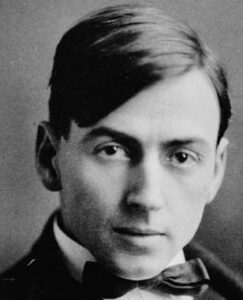
Tom Thomson
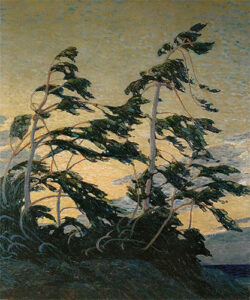
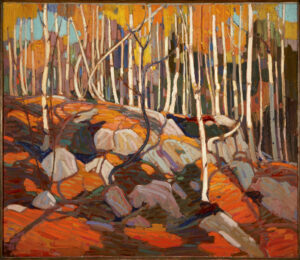
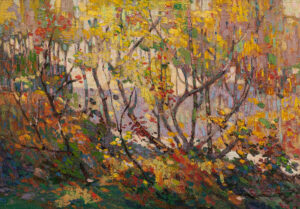
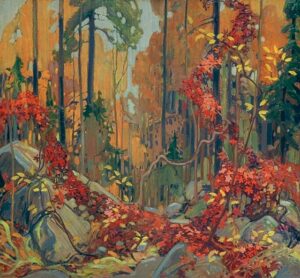
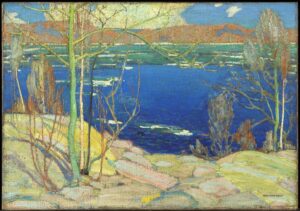
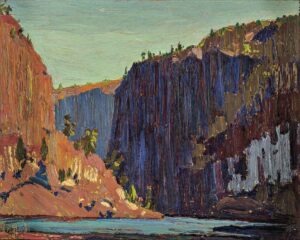
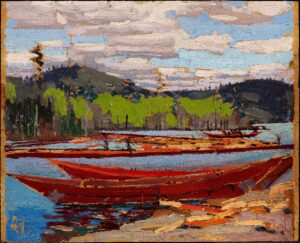
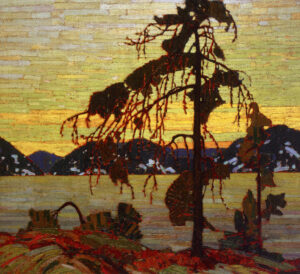
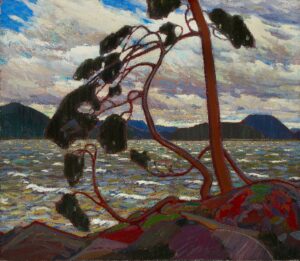
Tom Thomson, August 5, 1877 – July 8, 1917, was a Canadian painter best known for his landscapes of Algonquin Park and Georgian Bay. Largely self-taught as a fine artist, he worked as a commercial designer in Toronto before devoting himself to landscape painting. Although never a formal member of the Group of Seven, his work had a profound influence on the group’s formation and aesthetic.
Beginning in 1912, Thomson made frequent sketching trips into the Canadian wilderness, producing hundreds of oil sketches painted directly from nature and a smaller number of larger studio canvases. His bold brushwork, vivid color, and direct observation of the northern landscape helped establish a distinctly Canadian approach to landscape painting.
Thomson died unexpectedly by drowning in Canoe Lake at the age of thirty-nine. His paintings are held principally by the Art Gallery of Ontario, the National Gallery of Canada, and the McMichael Canadian Art Collection, and he is widely regarded as one of the foundational figures of Canadian art.



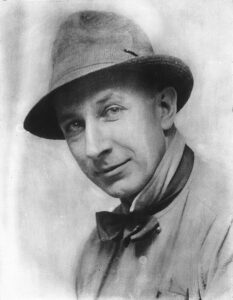
George Bellows
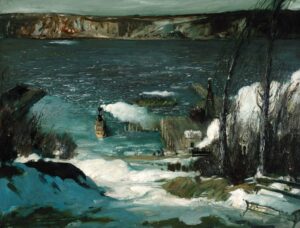
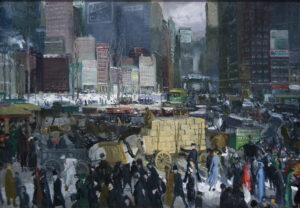
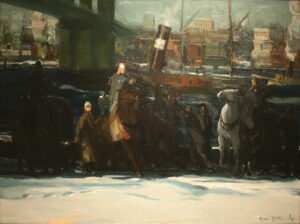
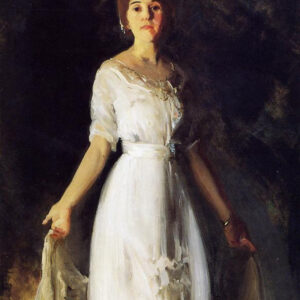
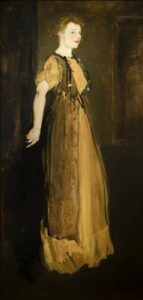
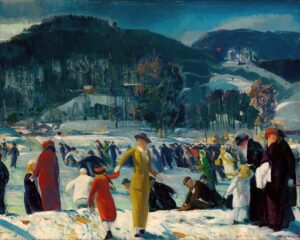
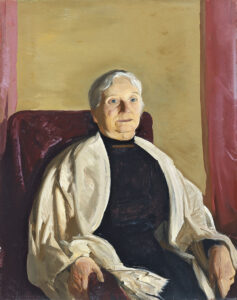
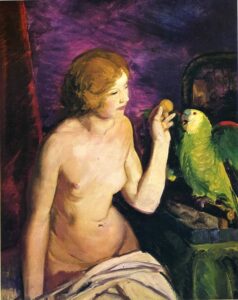
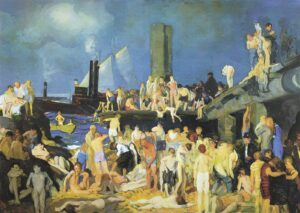
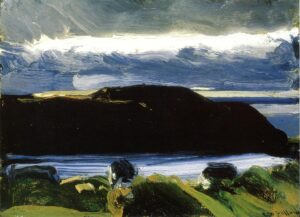
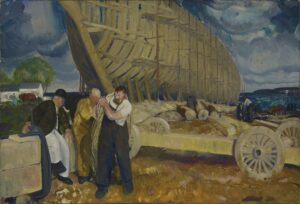
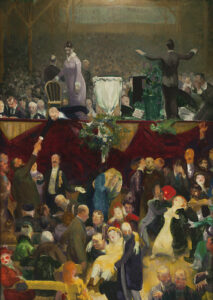
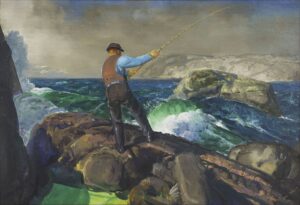
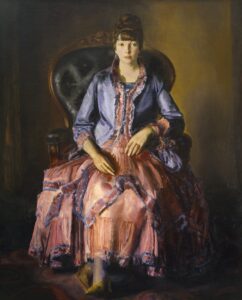
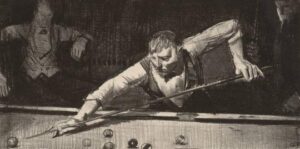
George Wesley Bellows, August 12, 1882 – January 8, 1925, was an American painter and lithographer associated with the Ashcan School. Born in Columbus, Ohio, he studied at Ohio State University before moving to New York, where he trained with Robert Henri at the New York School of Art.
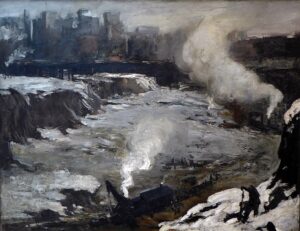
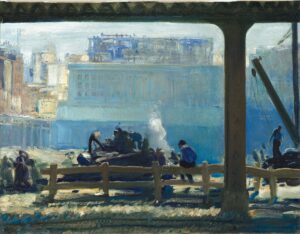
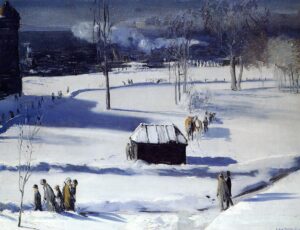
Bellows painted urban street scenes, boxing subjects, construction sites, portraits, seascapes, and later family and rural subjects. He was associated with Henri’s circle and with artists including John Sloan, William Glackens, George Luks, and Everett Shinn.
Bellows taught at the Art Students League of New York and made lithographs as a major part of his later work. His work is held by the Columbus Museum of Art, the Metropolitan Museum of Art, the National Gallery of Art, the Art Institute of Chicago, the National Gallery, London, and other major collections.




Max Liebermann
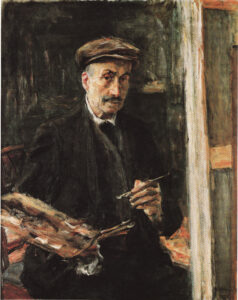
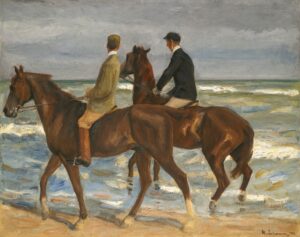
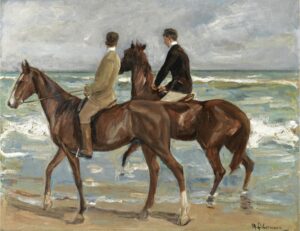
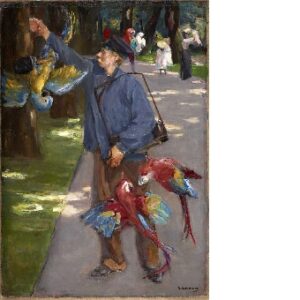
Max Liebermann, July 20, 1847 – February 8, 1935, was a German painter, printmaker, and draftsman associated with Realism, Impressionism, and the Berlin Secession. Born in Berlin to a Jewish textile-manufacturing family, he studied at the Weimar Saxon-Grand Ducal Art School and worked in Paris and the Netherlands, where he developed subjects drawn from labor, orphanages, rural life, and urban leisure.
His paintings include early social-realist subjects, Dutch labor scenes, beach and terrace pictures, portraits, and late garden views at Wannsee. He was connected with German and French Impressionist circles and became a central figure in the Berlin Secession, serving as its president from 1899.
Liebermann influenced younger German painters through his exhibition leadership and public role rather than through a formal school. His work is held by the Alte Nationalgalerie, Berlin; Hamburger Kunsthalle, Hamburg; Städel Museum, Frankfurt; Neue Pinakothek, Munich; Museum Folkwang, Essen; and other major collections.





Paris Bordone
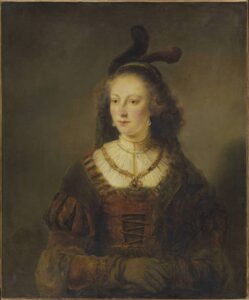
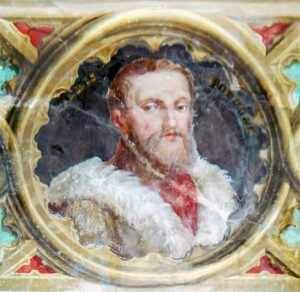
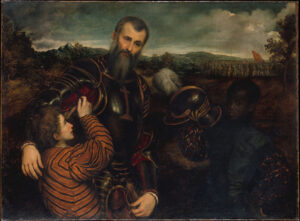
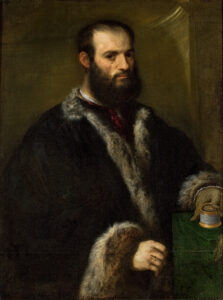
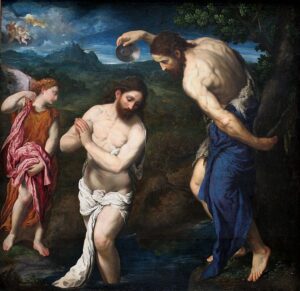
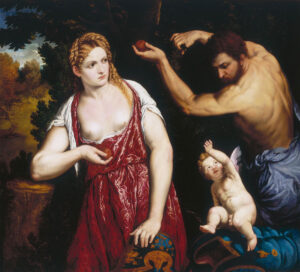
Paris Bordone, July 15, 1500 – January 19, 1571, was an Italian painter of the Venetian Renaissance. He was born in Treviso and moved to Venice while still young. According to early sources, he trained briefly with Titian, though his independent career developed outside Titian’s workshop system. He worked in Venice, Treviso, and other northern Italian centers, and also received commissions abroad.
Bordone painted portraits, mythological subjects, religious works, and allegorical compositions. His style is associated with the Venetian use of color, elaborate textiles, and architectural settings. He often combined portraiture with narrative or symbolic elements, and his works show connections to Titian, Giorgione, and later Mannerist taste.
Bordone did not found a formal school, though his work circulated widely among Venetian and northern Italian patrons. His paintings are held in major collections including the Metropolitan Museum of Art, New York; the National Gallery of Art, Washington DC; the Kunsthistorisches Museum, Vienna; the Pinacoteca di Brera, Milan; and the Galleria Doria Pamphilj, Rome.





Paul Gabriël
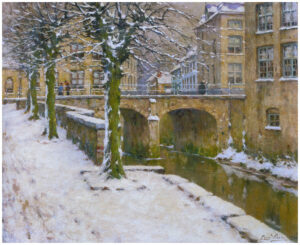
Paul Joseph Constantin Gabriël (1828–1903) was a Dutch landscape painter of the Hague School. Born in Amsterdam, he was the son of the sculptor and painter Paul Joseph Gabriël. He studied at the State Academy of Fine Arts in Amsterdam, where he was a pupil of Louis Zocher, and later studied with Cornelis Lieste in Haarlem. He also spent time in Cleves, where Barend Cornelis Koekkoek had founded a drawing academy.
Gabriël became known for landscapes of the Dutch countryside, especially polders, waterways, windmills, and broad skies. His work was associated with the Hague School, though he often used a clearer and brighter palette than many of his contemporaries. He was connected with artists including Anton Mauve, Willem Roelofs, and Hendrik Willem Mesdag.
Gabriël also taught younger artists; Bernard van Beek is recorded among his pupils. Today his work is represented in major Dutch collections, including the Rijksmuseum, Museum Boijmans Van Beuningen, the Kröller-Müller Museum, and Kunstmuseum Den Haag.


Theodoor Rombouts
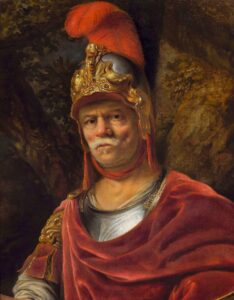
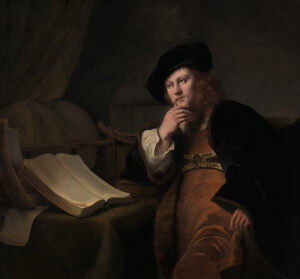
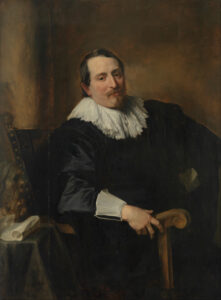
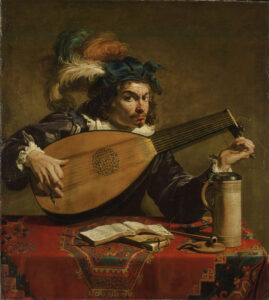
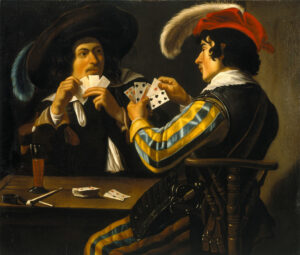
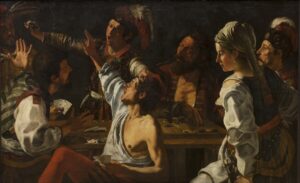
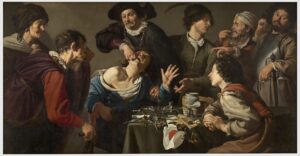
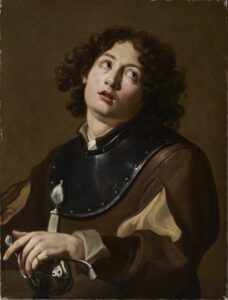
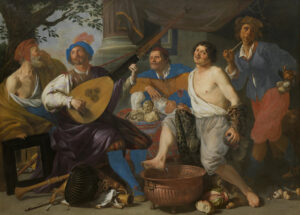
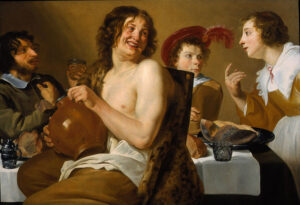
Theodoor Rombouts was a Flemish painter active in Antwerp in the early seventeenth century. He trained with Abraham Janssens and worked in Italy before returning to Antwerp, where he became a master in the Guild of Saint Luke in 1625. His paintings show the influence of Caravaggio and the Utrecht Caravaggists, especially in their dramatic lighting, half-length figures, musicians, card players, soldiers, and tavern scenes. He also painted religious and mythological subjects. Rombouts died in Antwerp in 1637.



Willard Metcalf
Willard Leroy Metcalf, American painter, July 1, 1858 – March 9, 1925.
Metcalf was born in Lowell, Massachusetts. He studied at the School of the Museum of Fine Arts, Boston, and later in Paris at the Académie Julian, where his teachers included Gustave Boulanger and Jules-Joseph Lefebvre. He also worked among American artists in Grez-sur-Loing and Giverny.
Metcalf lived and worked in Boston, Paris, Giverny, New York, Gloucester, Old Lyme, Cornish, and other New England locations. He returned from Europe in 1888, settled mainly in New York, and became closely associated with the Old Lyme Art Colony and the Cornish Art Colony.
His early work included figure painting and illustration, but he became best known as an American Impressionist landscape painter. His major subjects include New England villages, meadows, hillsides, gardens, and seasonal landscapes, especially winter and spring scenes.
Metcalf was a member of the Ten American Painters, the group formed by artists who broke from the Society of American Artists in 1897–1898. He taught at Cooper Union and the Art Students League in New York. His honors included membership in the American Watercolor Society and later recognition by the American Academy of Arts and Letters.