Abraham Janssens, c 1575 – January 25, 1632, was a Flemish painter born and active in Antwerp. He trained with Jan Snellinck, worked in Italy during the 1590s, and became a master in the Antwerp Guild of Saint Luke in 1601–1602.
Janssens specialized in large religious, mythological and allegorical paintings. His work combined late Mannerist traditions with influences from classical sculpture, Raphael and Caravaggio. Before Peter Paul Rubens returned to Antwerp in 1608, Janssens was regarded as the city’s leading history painter.
Janssens served as dean of the Antwerp Guild of Saint Luke in 1607. His pupils included Gerard Seghers, Theodoor Rombouts, Nicolas Régnier, Michele Desubleo and his son Abraham Janssens II.
The Lamentation over the Dead Christ, 1600–1604
Oil on panel, 37.2 x 47.7 in
Dayton Art Institute
Allegory of the Burdens of Time("The man overwhelmed by time is helped by hope and patience"), 1609
Oil on panel, 61.8 x 91.4 in //
Royal Museums of Fine Arts of Belgium, Brussels
Saint Mary Magdalene Renouncing the Riches of This World, early 17th century
Oil on panel, 48.5 x 37 in
Palais des Beaux-Arts, Lille, France
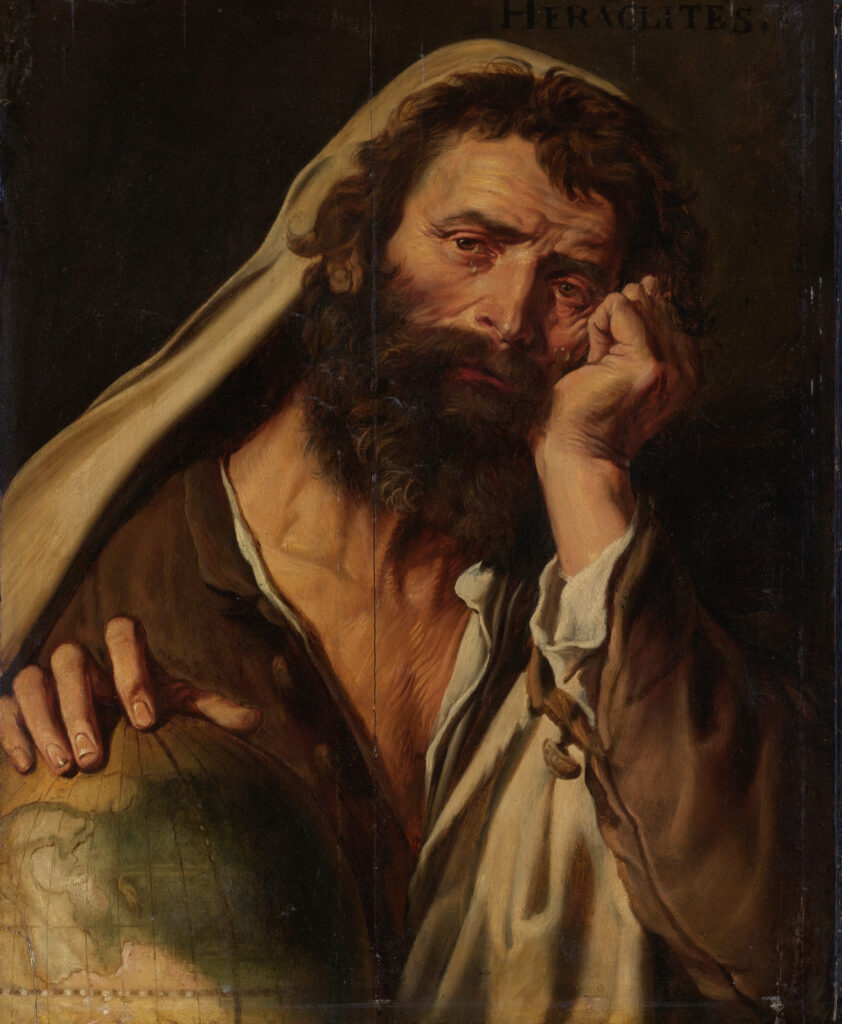
Heraclitus, c 1601–1602
Oil on panel, 25.2 x 20 in
Private Collection
Allegory of the Four Elements, 1608
Oil on panel, 65.4 x 78.7 in
Private Collection
Scaldis and Antverpia, 1609
Oil on panel, 68.5 x 121.3 in
Royal Museum of Fine Arts Antwerp
Diana and Her Companions, c 1613
Oil on canvas, 48.2 x 36.8 in
Alte Pinakothek, Munich
The Four Elements, c 1615
Oil on canvas, 64.9 x 78.4 in
Museum of Fine Arts, Houston
The Moon: An Allegory of Fickleness, 1615–1618
Oil on canvas, 50.1 x 41.4 in
Statens Museum for Kunst, Copenhagen
Apotheosis of Aeneas, c 1617
Oil on canvas, 78.9 x 89.9 in
Staatsgalerie Neuburg, Neuburg an der Donau, Germany
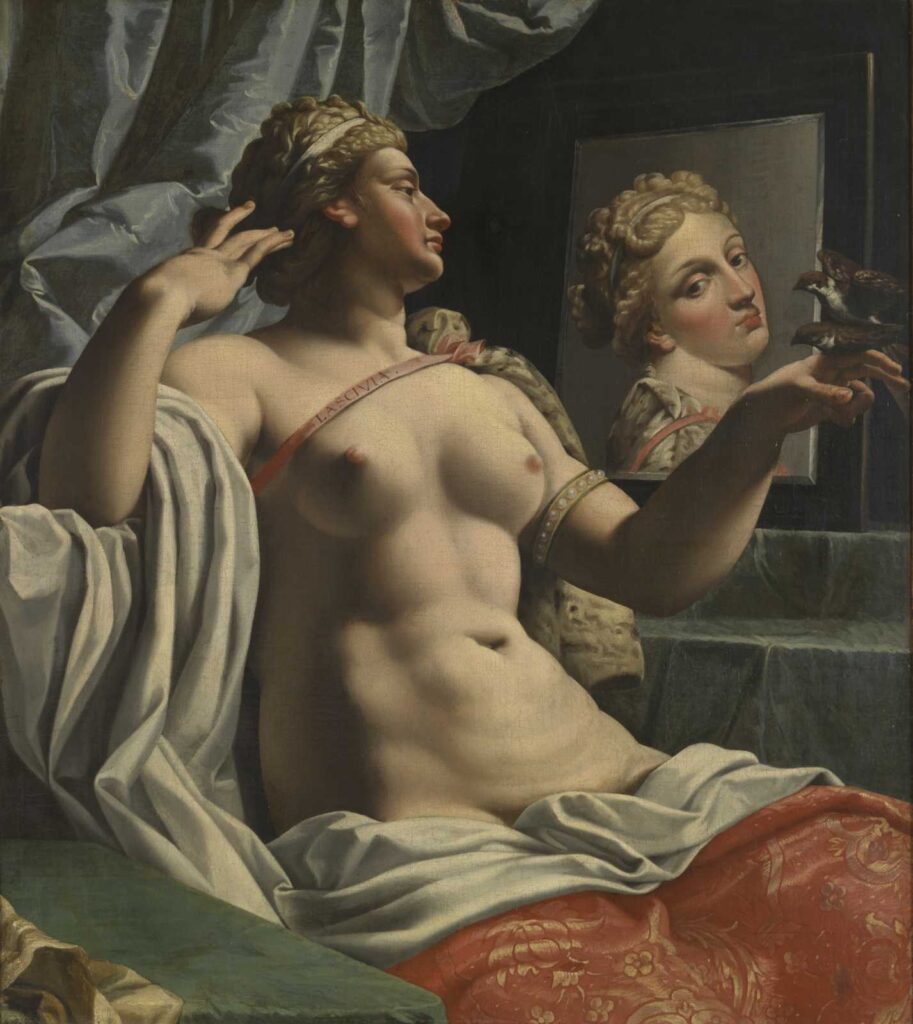
Lascivia, c 1618
Oil on canvas, 42.3 x 38.2 in
Royal Museums of Fine Arts of Belgium, Brussels
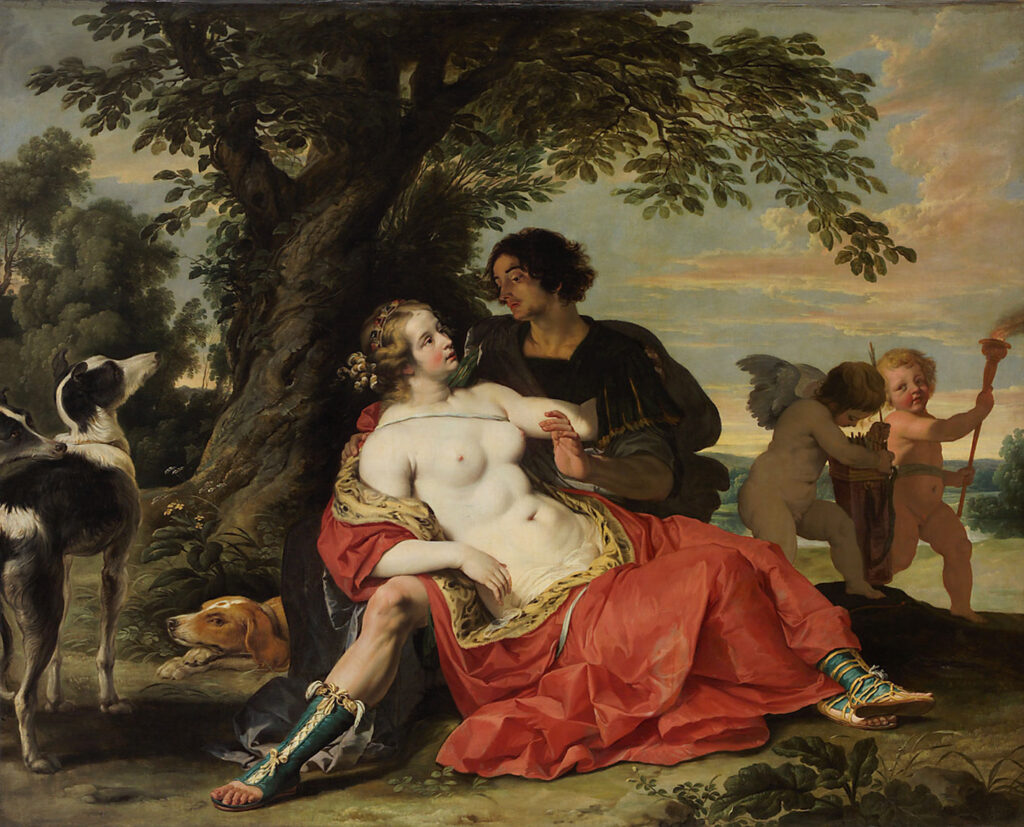
Venus and Adonis, c 1620
Oil on canvas, 78.7 x 94.4 in
Kunsthistorisches Museum, Vienna
Allegory of Joy and Melancholy, 1628
Oil on canvas, 47.4 x 38.4 in
Ashmolean Museum, Oxford, UK
Comments are Disabled