Skip to content
Daniel Lieberman's Imaginary Museum
"A work of art is a transformation of something in order to transform someone." — Paul Valéry
Search for:
Home
Century
15th Century
16th Century
17th Century
18th Century
19th Century
20th Century
Nationality
American
Australian
Austrian
Belgian
Czech
Danish
Dutch
English
Estonian
Finnish
Flemish
French
German
Greek
Italian
Japanese
Lithuanian
Mexican
Netherlandish
Norwegian
Russian
Scottish
Spanish
Swedish
Swiss
Venetian
About
About me
My Favorite Artists
The Imaginary Museum
Cabinet of Curiosities
Menu
Posts in Category:
november 14
Claude Monet
On March 24, 2025 -
19th Century
,
20th Century
,
French
,
november 14
Claude Monet
, French painter November 14, 1840 – December 5, 1926
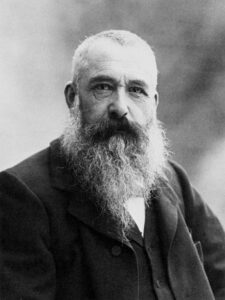
Nadar, Claude Monet, c 1899
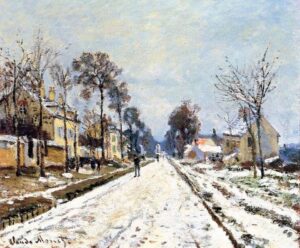
Claude Monet, French painter 1840-1926 Snow Effect, The Road to Louveciennes, 1870 Oil on canvas
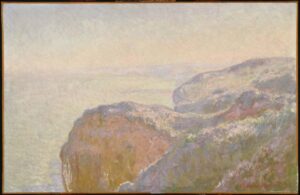
At Val-Saint-Nicolas near Dieppe in the Morning, 1897 Oil on canvas, 25 1/2 x 39 3/8 in // The Phillips Collection, Washington, DC
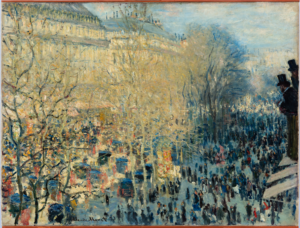
Boulevard des Capucines, 1873–1874 Oil on canvas, 31 5/8 x 23 3/4 in The Nelson-Atkins Museum of Art, Kansas City
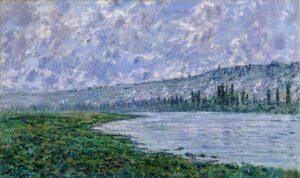
The Seine at Vétheuil, 1880 Oil on canvas, 23 3/4 x 39 1/2 in // Metropolitan Museum of Art, New York
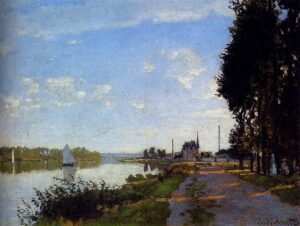
Argenteuil, 1872 Oil on canvas 20 × 26 // Seattle Art Museum
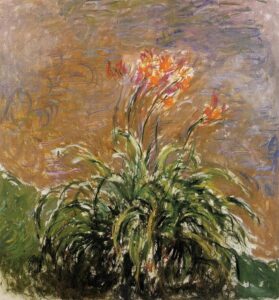
Hemerocallis, 1914-17 Oil on canvas Musée Marmottan-Monet, Paris
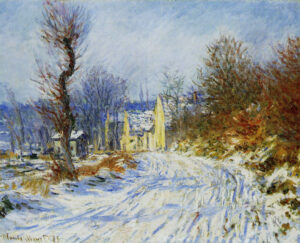
Road to Giverny in Winter, 1885 Oil on canvas, 23.6 x 31.9 in // Private collection
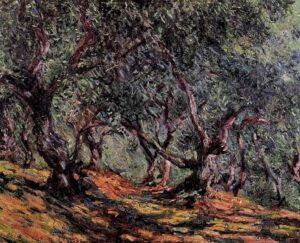
Olive trees in Bordighera, 1884 Oil on Canvas, 23.6 ×29.9 in // Private collection
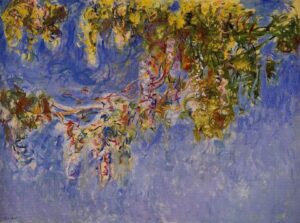
Wisteria, 1919-20 Oil on canvas 59 x 78.7 in // Allen Memorial Art Museum, Oberlin College
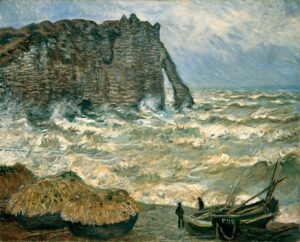
Stormy Sea at Etretat, 1883 Oil on canvas, 39.3 in x 31.8 in // Museum of Fine Arts of Lyon, France
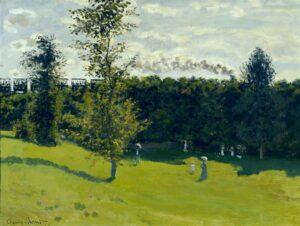
The Train in the Country, c.1870 - c.1871 Oil on canvas, 25.6 x 19.7 in // Musée d'Orsay, Paris, France
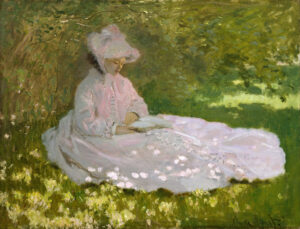
Springtime, 1872 Oil on canvas, 19.7 x 25.6 in // Walters Art Museum, Baltimore
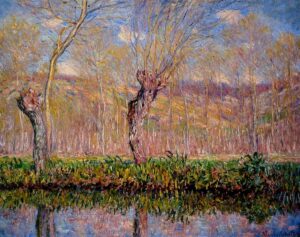
The Banks of the River Epte in Springtime, 1885 Oil on canvas, 25.6 x 31.9 in // Private Collection
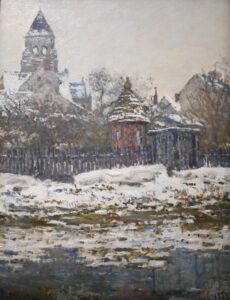
Church at Vetheuil, 1879 Oil on canvas, 25.8 x 19.7 in // Musée d'Orsay, Paris
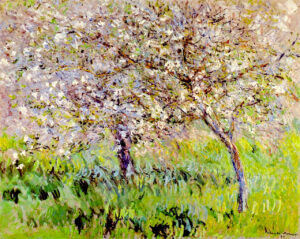
Apple Trees in Bloom at Giverny, 1900 - 1901 Oil on canvas
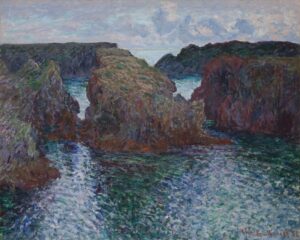
Rocks at Port-Goulphar, Belle-Île, 1886 Oil on canvas, 26 × 32 3/16 in // Art Institute of Chicago
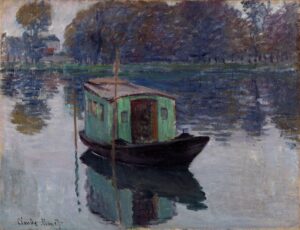
The Studio Boat, 1874 Oil on canvas, 19.6 x 25.1 in // Kröller-Müller Museum, Otterlo, Netherlands
View At Rouelles, Le Havre, 1858 Edit this at Wikidata Oil on canvas, 18.1 x 25.5 in // Marunuma Art Park, Asaka, Japan
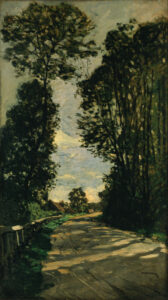
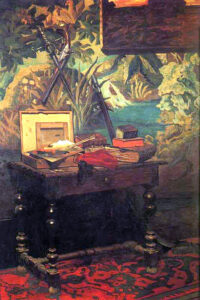
Corner of a Studio, 1861 Oil on canvas, 70.8 x 51.1 in // Musée d'Orsay, Paris
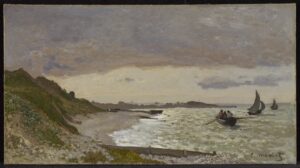
The Seashore at Sainte-Adresse, 1864 Oil on canvas Minneapolis Institute of Art
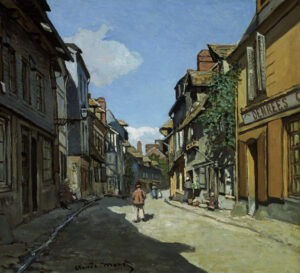
Rue de la Bavole, Honfleur, about 1864 Oil on canvas, 22 x 24.01 in // Museum of Fine Arts Boston
The Seashore at Sainte-Adresse, 1864 Oil on canvas Minneapolis Institute of Art
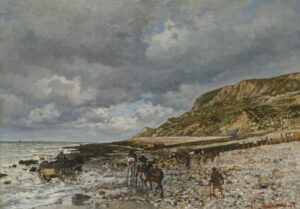
Horses at the Point of the Hève, 1864 Oil on canvas, 21.3 x 28.9 in // Private collection
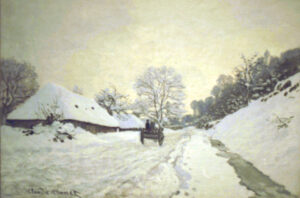
The Cart: Road Under the Snow in Honfleur, 1865 Oil on canvas, 25.5 x 36.6 in // Musée d'Orsay, Paris
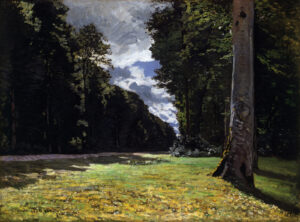
Pavé de Chailly in the Fontainebleau Forest, 1865 Oil on canvas, 38.1 x 51.3 in // Ordrupgaard, Copenhagen
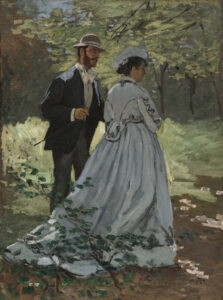
Bazille and Camille (Study for "Déjeuner sur l'Herbe"), 1865 Oil on canvas, 36 5/8 x 27 1/8 in // Unknown location
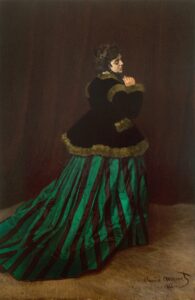
Camille, 1866 Oil on canvas, 90.9 x 59.4 in Kunsthalle Bremen