Posts in Category: 17th Century
Massimo Stanzione
Massimo Stanzione, Italian painter, 1585 – 1656


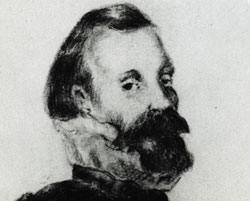


Govert Flinck
Govert Flinck, January 25, 1615 – February 2, 1660, was a Dutch painter of portraits, history paintings, and civic commissions. Born in Cleves, he was first trained by Lambert Jacobsz in Leeuwarden and later worked in Amsterdam, where he became one of Rembrandt’s pupils and adapted Rembrandt’s handling of light, costume, and biblical subject matter.
Flinck painted portraits, tronies, biblical scenes, and large civic works. His early paintings closely follow Rembrandt’s manner, while his later work became smoother and more public in character, suited to Amsterdam regents and civic commissions. He received major commissions for the Amsterdam Town Hall, including The Incorruptible Consul Marcus Curius Dentatus and Solomon Praying for Wisdom.
Flinck’s work is held by the Rijksmuseum, Amsterdam Museum, Louvre, Kelvingrove Art Gallery and Museum, Mauritshuis, Royal Palace Amsterdam, and other public collections.


Abraham Bloemaert
Abraham Bloemaert, Dutch painter and printmaker, December 25, 1564 - January 27, 1651


Meindert Hobbema
Meindert Hobbema, October 31, 1638 – December 7, 1709, was a Dutch landscape painter born and active in Amsterdam. Orphaned as a teenager, he became a pupil of Jacob van Ruisdael by 1655.
Hobbema specialized in wooded landscapes, watermills, cottages, roads, and streams. Most of his surviving paintings date from the late 1650s and 1660s, and his figures were sometimes supplied by other artists, including Adriaen van de Velde.
In 1668 Hobbema married and became a municipal wine gauger, after which his artistic production declined. He died in Amsterdam and is represented in collections including the Rijksmuseum, National Gallery, National Gallery of Art, Mauritshuis, and Frick Collection.


Hercules Seghers
Hercules Seghers, c 1589/1590 – c 1633/1640, was a Dutch painter and printmaker born in Haarlem. He probably trained in Amsterdam with the Flemish landscape painter Gillis van Coninxloo and was admitted to the Haarlem Guild of Saint Luke in 1612.
Seghers worked in Haarlem, Amsterdam, and The Hague. He specialized in landscapes and developed experimental printmaking methods, using colored inks, prepared paper or textiles, and extensive hand coloring to make individual impressions from the same plate.
Seghers was documented in The Hague in 1632 and 1633, but the date and place of his death are uncertain. Rembrandt owned several of his paintings and reworked one of his etched plates; Segers’s works are held by the Rijksmuseum, Mauritshuis, Uffizi Gallery, and other collections.


