Luca Giordano, October 18, 1634 – January 3, 1705, was an Italian painter and printmaker born in Naples. He trained first with his father, Antonio Giordano, and was strongly influenced by Jusepe de Ribera; study in Rome, Venice, and other Italian centers broadened his knowledge of Renaissance and Baroque painting.
Giordano worked in Naples, Rome, Florence, Venice, and Spain, producing altarpieces, easel paintings, and large decorative fresco cycles. His speed of execution earned him the nickname Luca fa presto. From 1692 to 1702 he served the Spanish court, where his major commissions included frescoes for the Escorial and the Casón del Buen Retiro.
Giordano returned to Naples in 1702 and continued working there until his death. His paintings and drawings are held by major collections including the Museo del Prado, the National Museum of Capodimonte, the Uffizi Gallery, the Louvre, the Metropolitan Museum of Art, and the J. Paul Getty Museum.
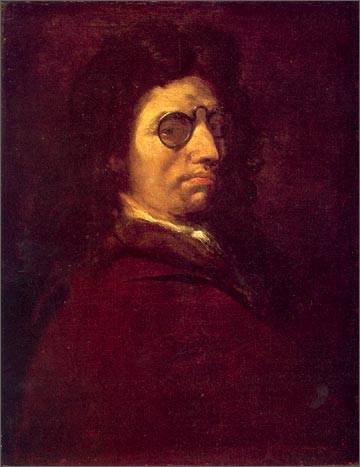
Self-Portrait, c 1692
Oil on canvas, 24.8 × 19.2 in
Pio Monte della Misericordia, Naples
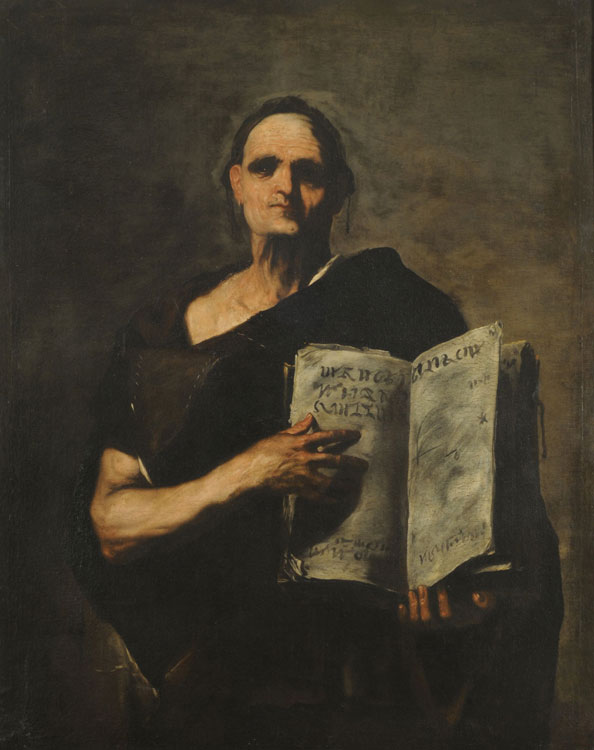
A Mathematician, 17th century
Oil on canvas, 50.3 × 40.1 in
National Museum of Fine Arts, Buenos Aires
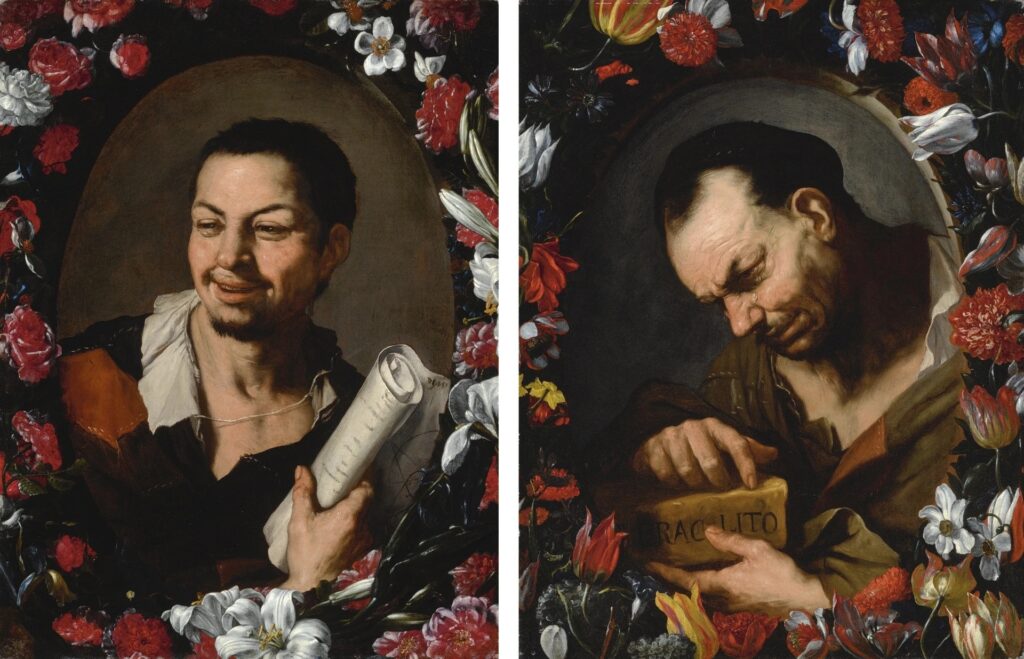
Democritus and Heraclitus, 17th century
Oil on canvas, each 28 × 22 in
Private Collection
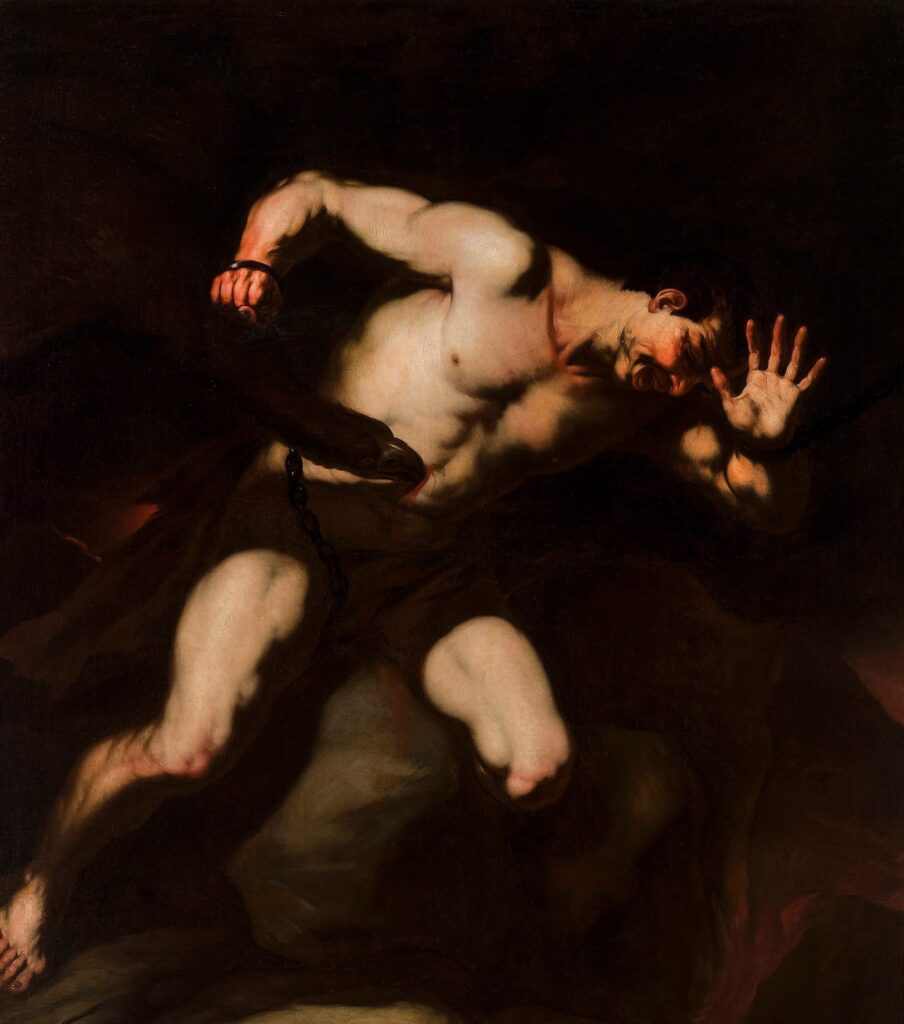
Prometheus, second half of the 17th century
Oil on canvas, 73.5 × 62.9 in
National Museum in Warsaw
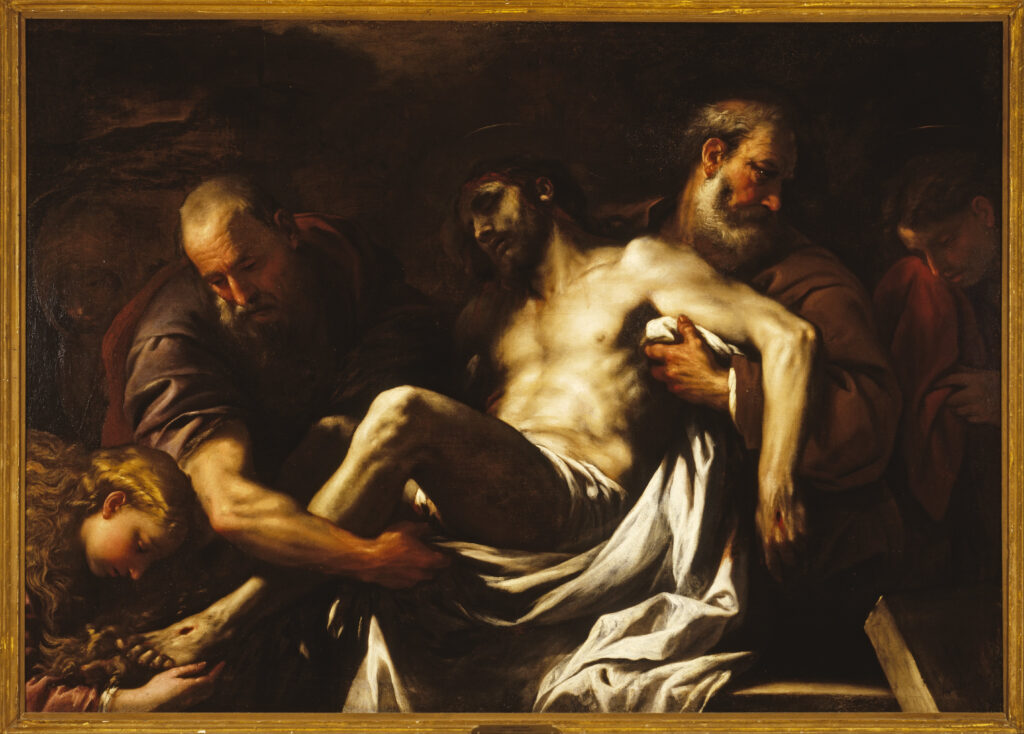
The Entombment of Christ, 1655
Oil on canvas
Philbrook Museum of Art, Tulsa, OK
Four Women Making Music, c 1658–1660
Oil on canvas, 22.5 × 40 in
Mauritshuis, The Hague
The Descent from the Cross, c 1659
Oil on canvas, 90.1 × 68.1 in
Museum of Santa Cruz, Toledo, Spain
Entombment of Christ, c 1659–1660
Oil on canvas, 83.5 × 62.8 in
Detroit Institute of Arts
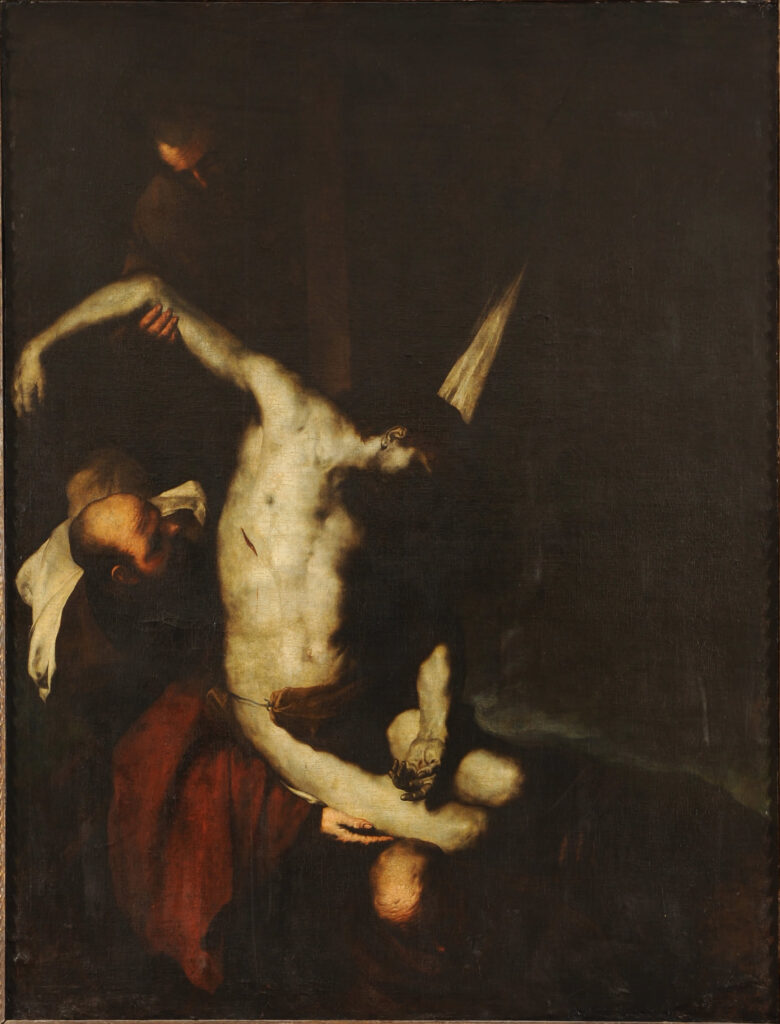
Martyrdom of Saint Bartholomew, c 1660
Oil on canvas
Fine Arts Museums of San Francisco
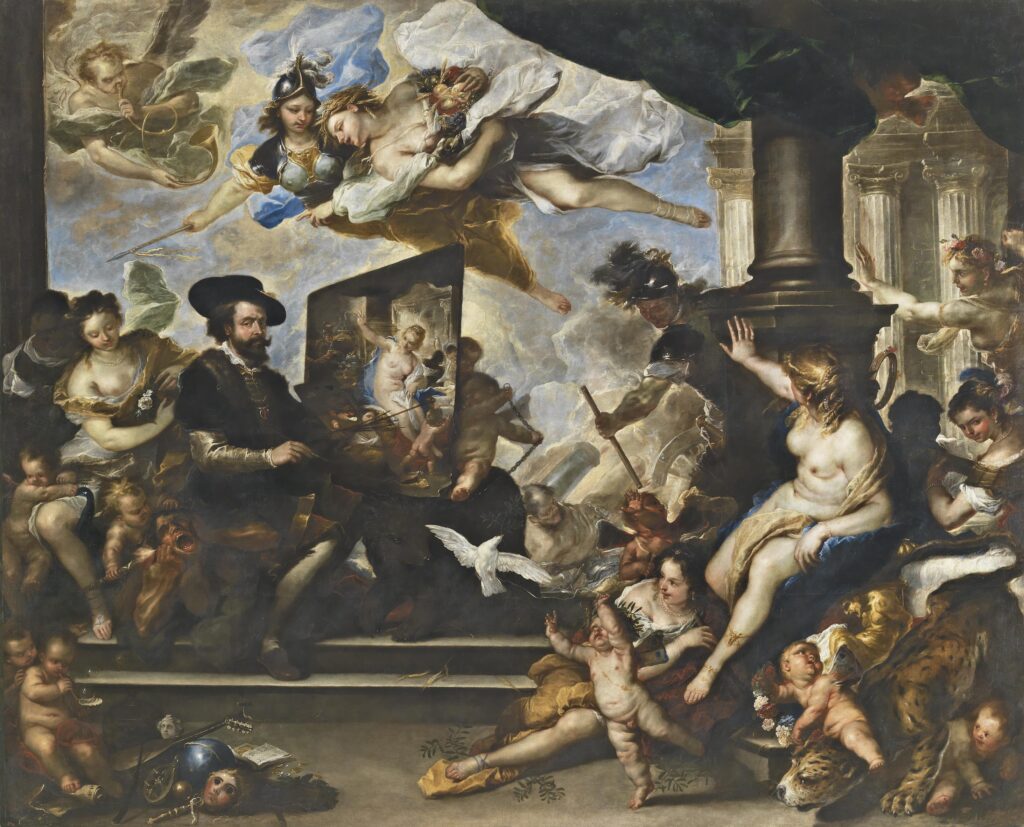
Rubens Painting “The Allegory of Peace,” c 1660
Oil on canvas, 132.7 × 163 in
Museo del Prado, Madrid
The Fall of the Rebel Angels, c 1660–1665
Oil on canvas, 165 × 111.4 in
Kunsthistorisches Museum, Vienna
Ecstasy of Saint Mary Magdalene, 1660–1665
Oil on canvas
Hispanic Society of America, New York
The Rape of Lucretia, 1663
Oil on canvas, 54.3 × 73.6 in
Museo di Capodimonte, Naples
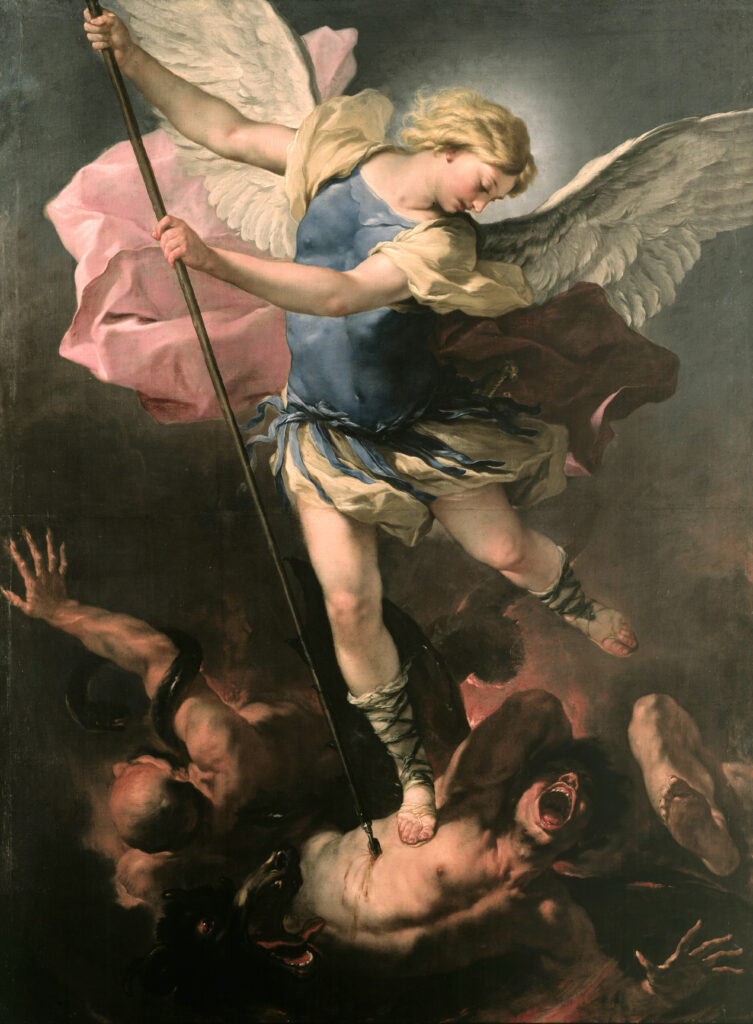
Saint Michael, c 1663
Oil on canvas, 77.9 × 57.8 in
Gemäldegalerie, Berlin
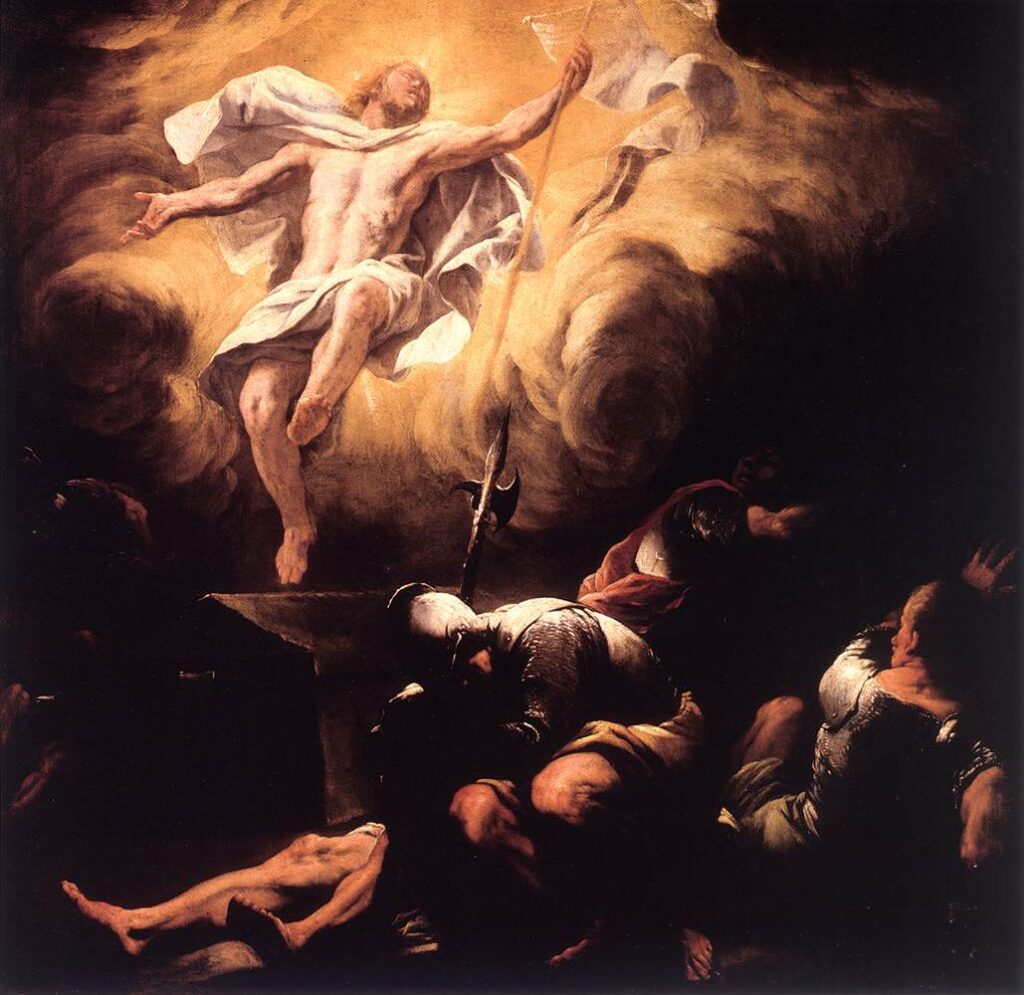
The Resurrection, after 1665
Oil on canvas, 44.8 × 45.6 in
Residenzgalerie Salzburg, Austria
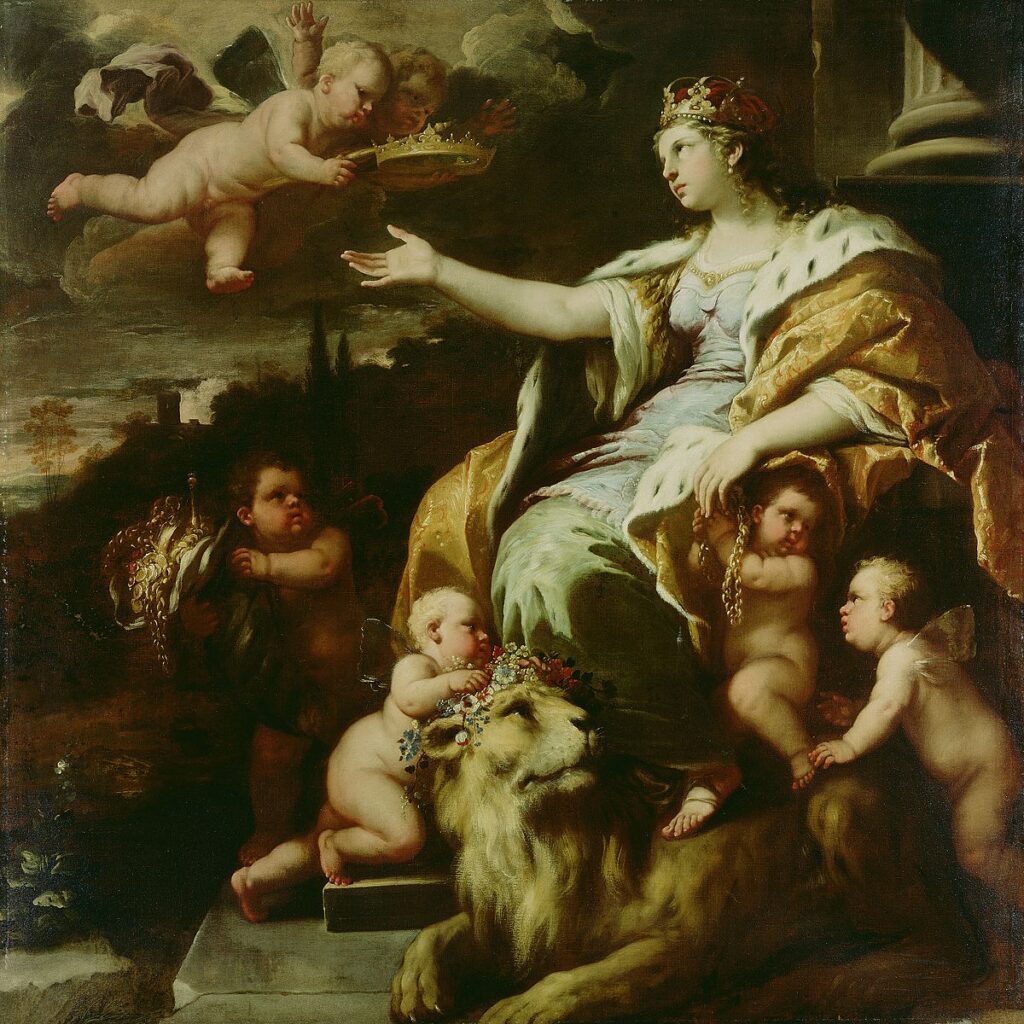
Allegory of Magnanimity, c 1670
Oil on canvas, 71 × 71 in
J. Paul Getty Museum, Los Angeles
Neptune and Amphitrite, 1682–1685
Fresco
Palazzo Medici Riccardi, Florence
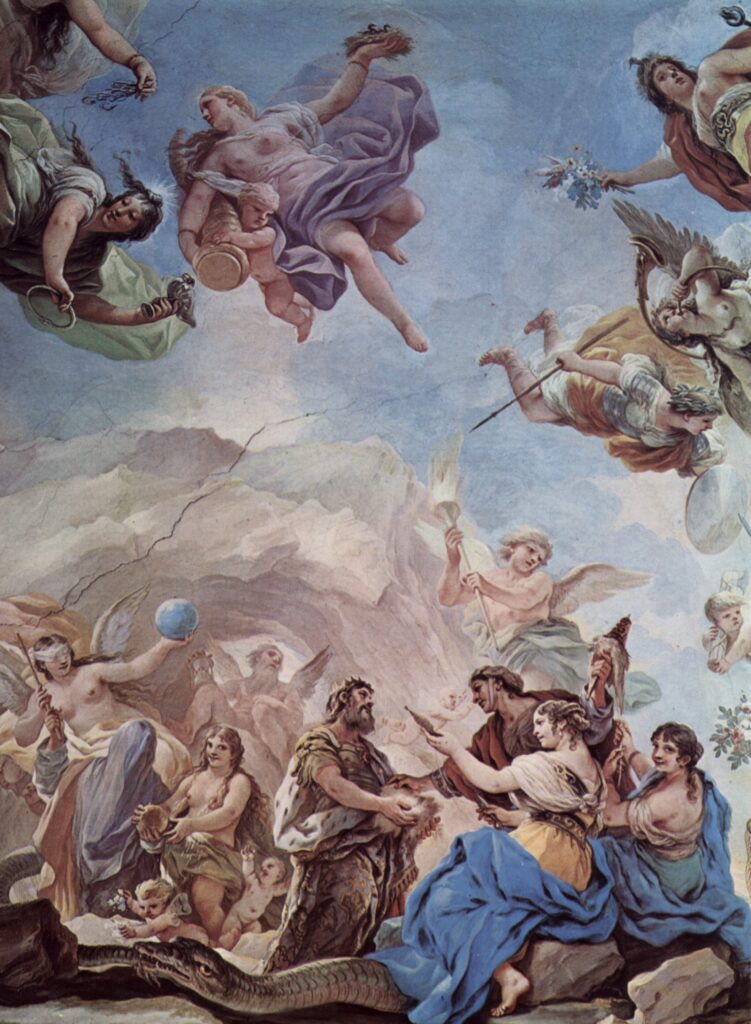
Triumph of the Medici in the Clouds of Mount Olympus, 1684–1686
Fresco
Palazzo Medici Riccardi, Florence
The Creation of Man, 1684–1686
Fresco
Palazzo Medici Riccardi, Florence
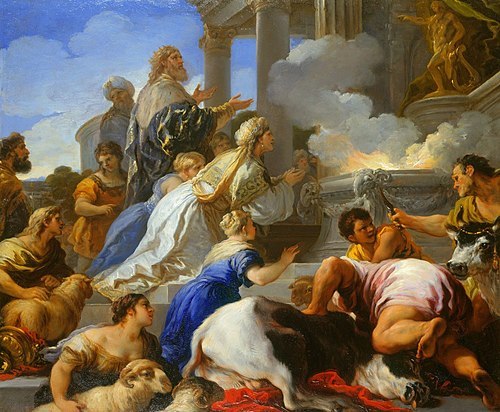
Psyche’s Parents Offering Sacrifice to Apollo, c 1695–1697
Oil on canvas, 22.1 × 27.2 in
Royal Collection, UK
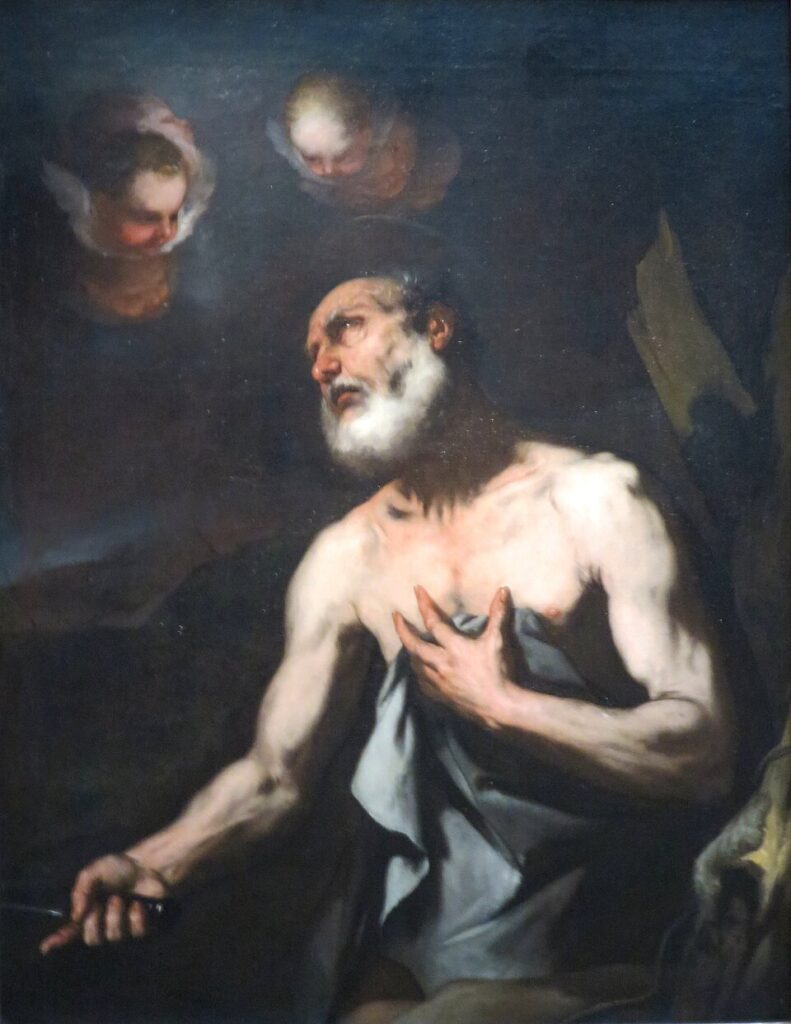
The Death of Archimedes
Oil on canvas, 69 × 87 in
National Trust, UK
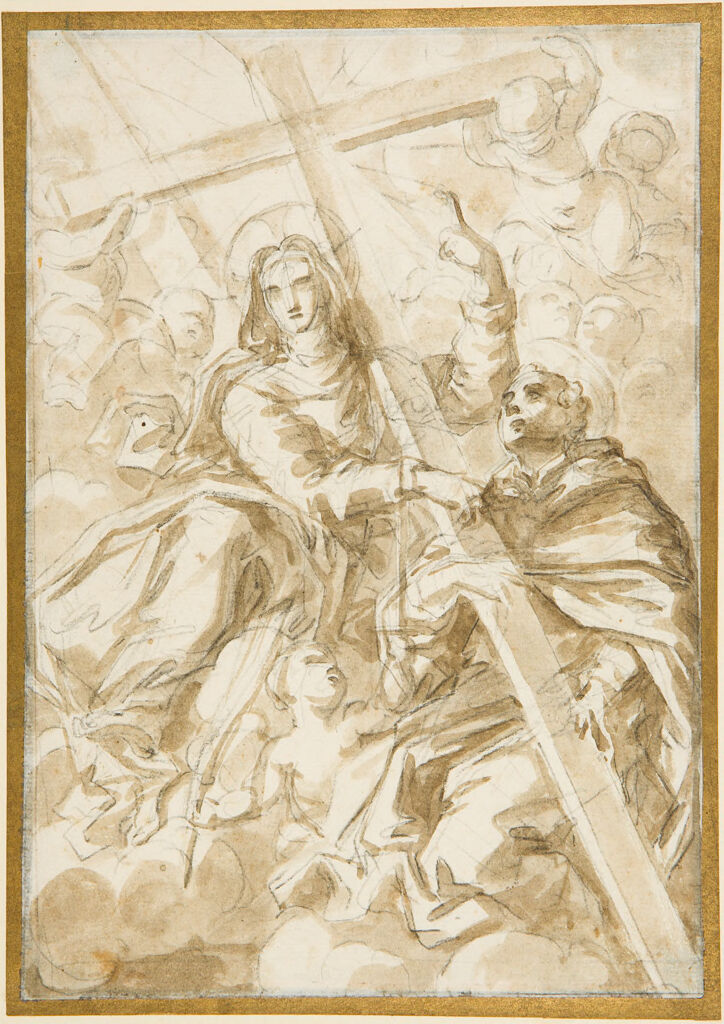
Saint Teresa and Saint John of the Cross, 17th century
Black chalk and brown wash on cream antique laid paper, laid down, 8.8 × 6.1 in
Harvard Art Museums, Cambridge, MA
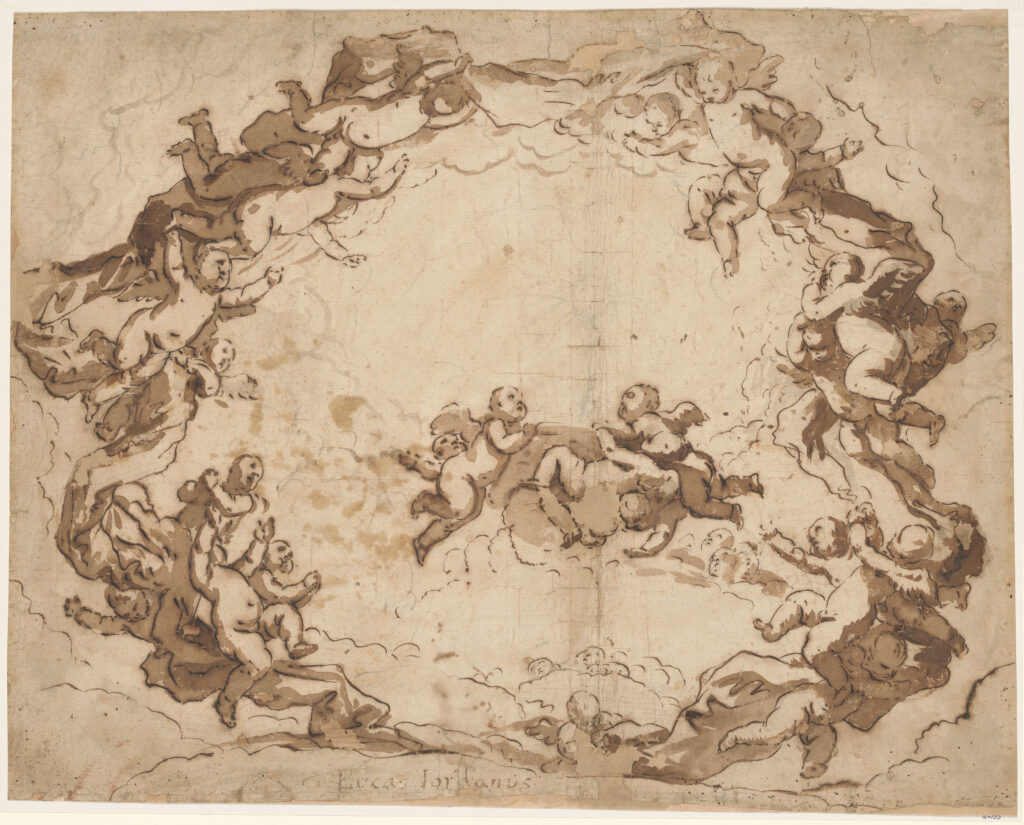
A Glory of Angels, c 1650–1669
Pen and brown ink, brown wash, over black chalk sketch, 15.3 × 19.3 in
Metropolitan Museum of Art
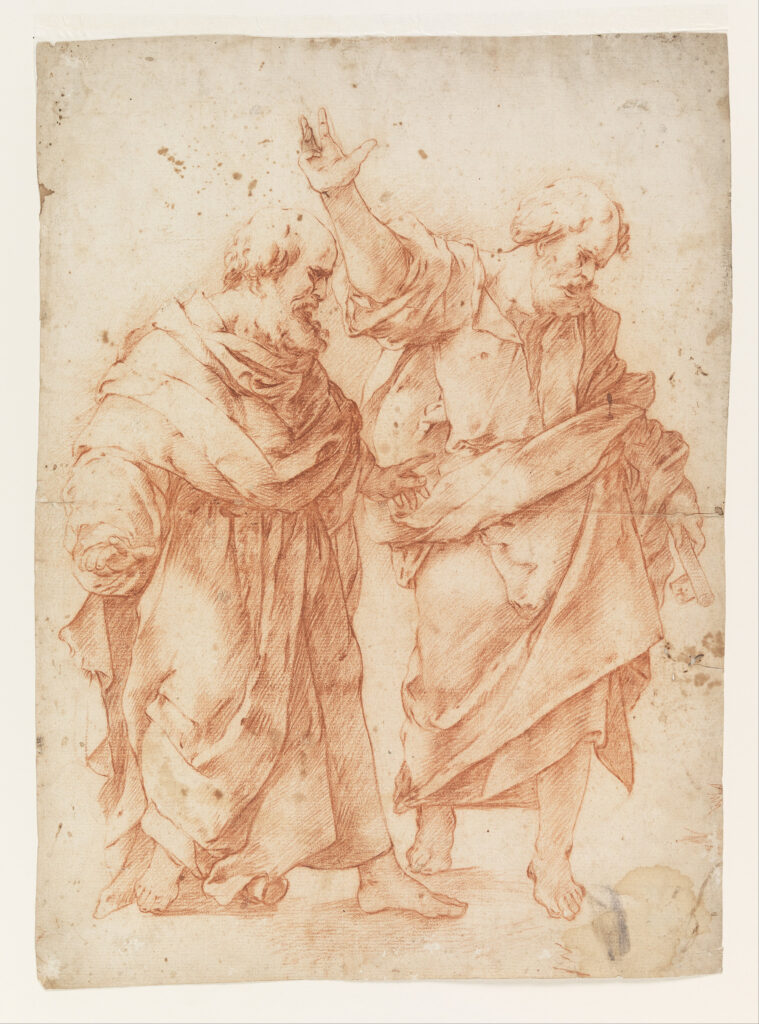
Two Apostles, before 1705
Red chalk on cream laid paper
Cooper Hewitt, Smithsonian Design Museum
Neptune Triumphant
Red chalk and red chalk wash on paper, 7.8 × 15.4 in
Morgan Library & Museum, New York
Saint Anne Received by the Virgin and Christ
Etching
National Gallery of Art, Washington DC