James Abbott McNeill Whistler, July 11, 1834 – July 17, 1903 was an American painter, printmaker, and draftsman best known for his portraits, nocturnes, and views of London, Venice, and the Thames. Born in Lowell, Massachusetts, he spent part of his youth in Russia, where his father worked as a railroad engineer. He studied drawing at the Imperial Academy of Arts in Saint Petersburg and later attended the United States Military Academy at West Point, from which he was dismissed.
After moving to Paris in 1855, Whistler studied briefly at the atelier of Charles Gleyre and absorbed the influence of French Realism. He settled in London, where he spent most of his career. His circle included artists such as Gustave Courbet, Dante Gabriel Rossetti, and Édouard Manet. Whistler became a leading advocate of the idea that art need not serve a moral or narrative purpose, a position reflected in works such as Arrangement in Grey and Black No. 1 (commonly known as Whistler’s Mother) and his celebrated nocturnes.
Whistler was also an accomplished etcher and lithographer. His series of Thames and Venice prints are regarded among the finest achievements in nineteenth-century printmaking. In 1878 he famously sued the critic John Ruskin for libel after Ruskin attacked Nocturne in Black and Gold: The Falling Rocket. Although Whistler won the case, the costs contributed to his bankruptcy.
As a teacher, Whistler influenced a generation of younger artists through his example and writings. His pupils included Walter Sickert, who became a major figure in British art. Whistler’s work can be found today in major collections including the Metropolitan Museum of Art, the National Gallery of Art, the Freer Gallery of Art, the Art Institute of Chicago, and Tate Britain.
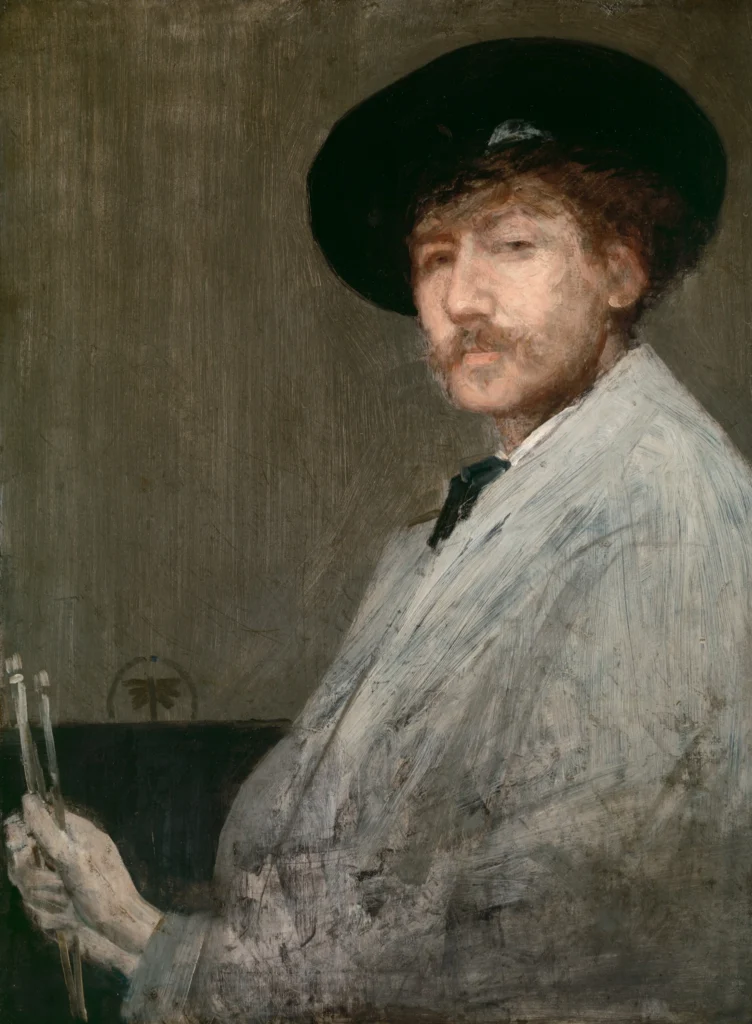
Arrangement in Gray: Portrait of the Painter, c. 1872
Oil on canvas, 29.5 x 21 in
Detroit Institute of Arts

The Thames in Ice / Old Battersea Bridge, 1860
Oil on canvas, 29.3 x 21.7 in
Freer Gallery of Art, Washington
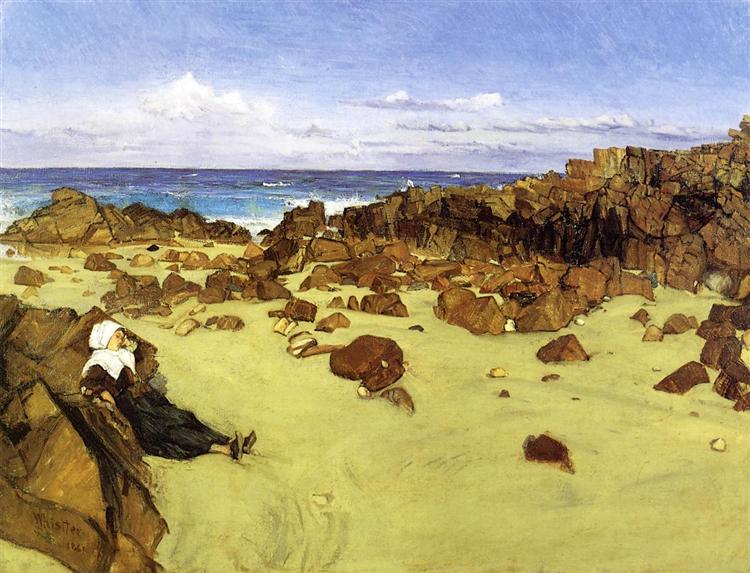
The Coast of Brittany/Alone with the Tide), 1861
Oil on canvas, 34.4 x 45.5 in
Wadsworth Atheneum Museum of Art, Hartford
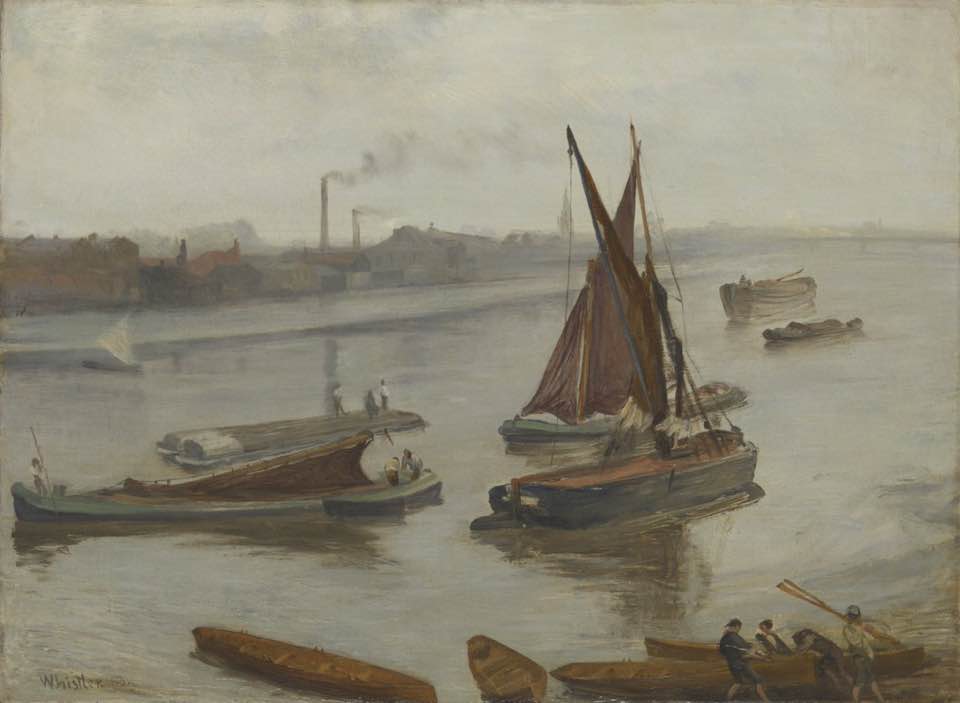
Grey and Silver: Old Battersea Reach, 1863
Oil on canvas, 20 x 27 in
Art Institute of Chicago
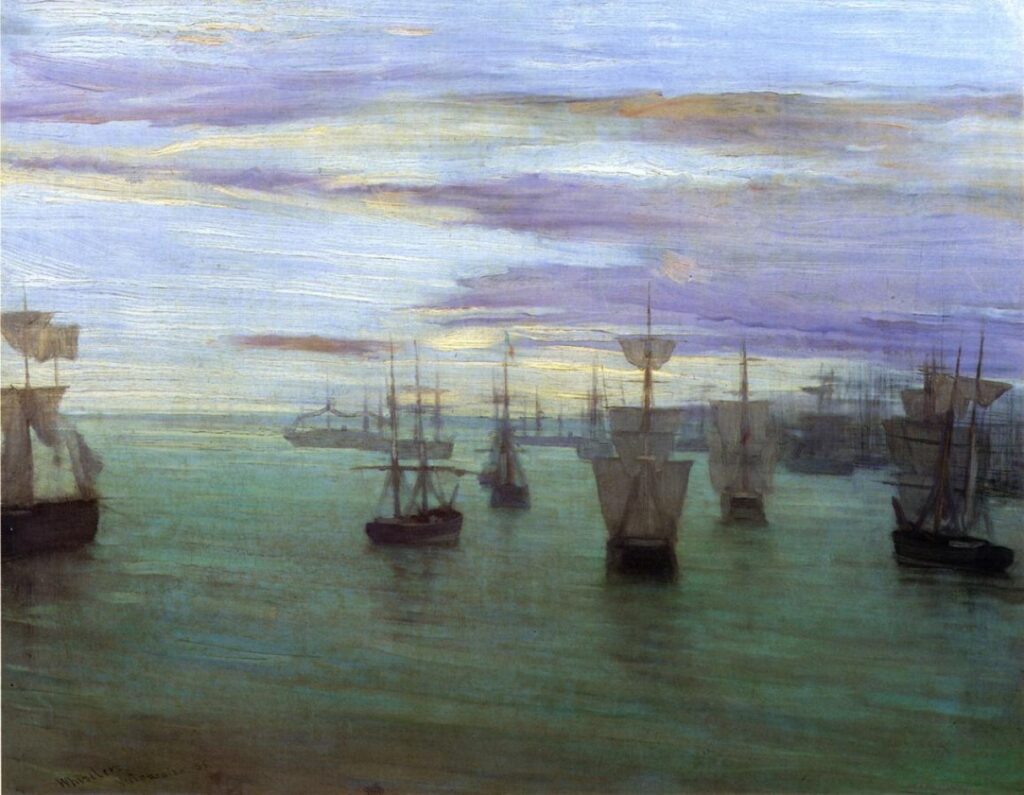
Crepuscule in Flesh Color and Green: Valparaiso, 1866
Oil on canvas, 29.9 x 23 in
Tate Britain, London
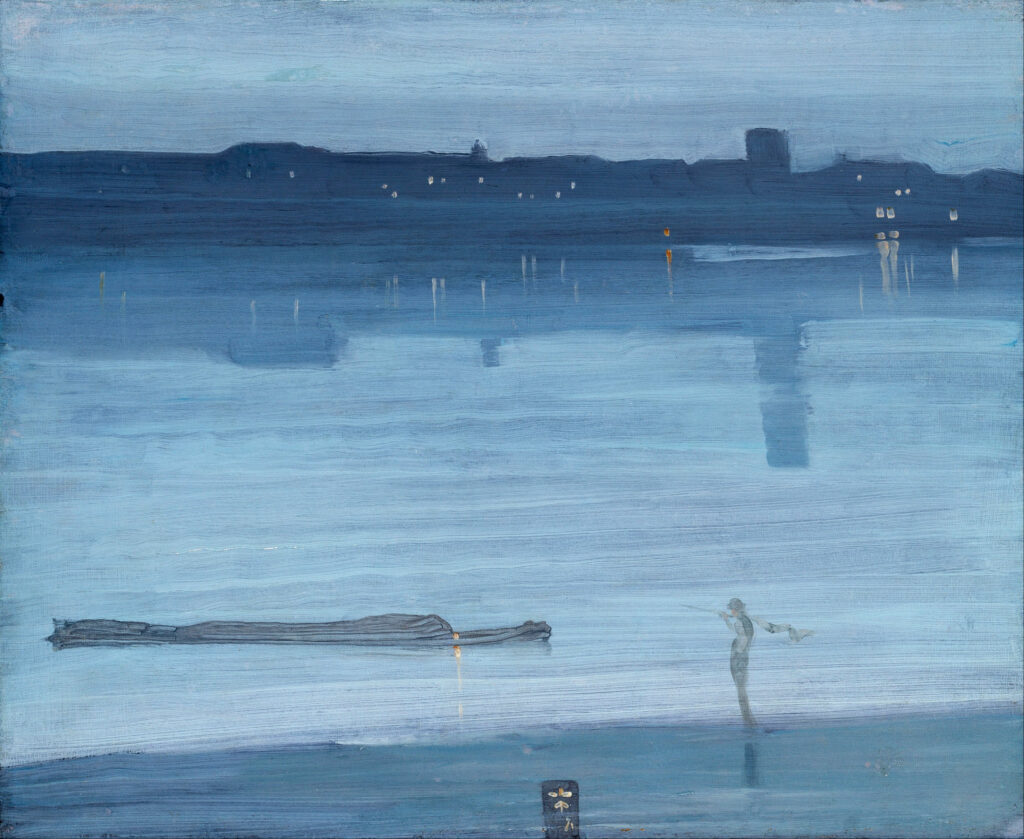
Nocturne: Blue and Silver – Chelsea, 1871
Oil on wood, 23.9 x 19.8 in
Tate Britain, London
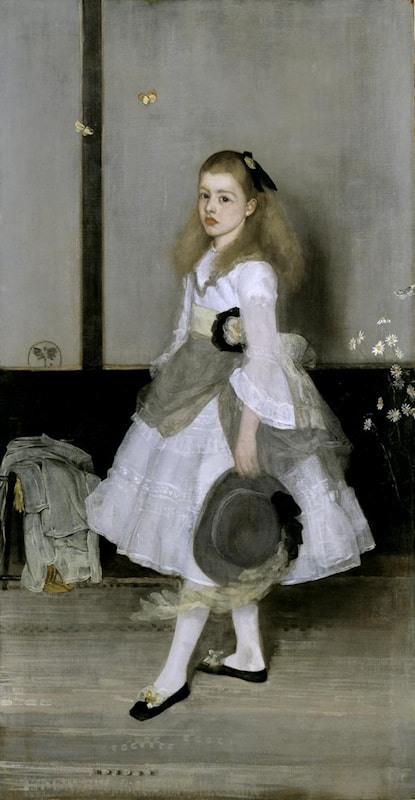
Harmony in Gray and Green: Miss Cicely Alexander, 1872–1873
Oil on canvas, 74.8 x 38.5 in
Tate Britain, London
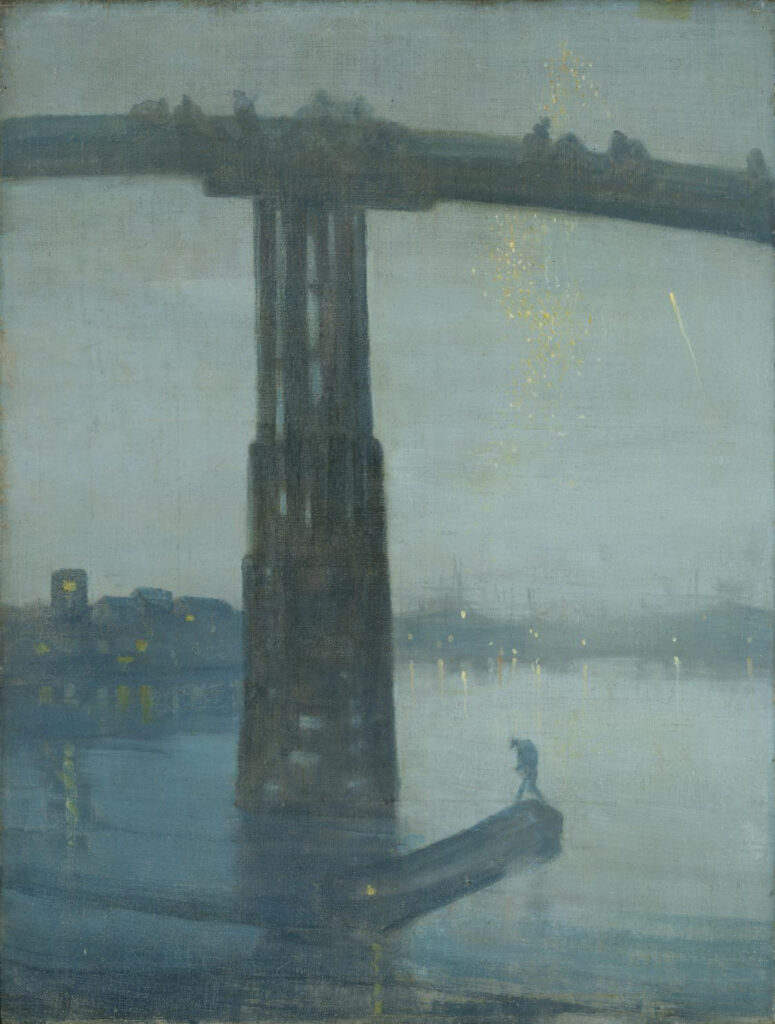
Nocturne: Blue and Gold – Old Battersea Bridge, c. 1872–1875
Oil on canvas, 26.2 x 19.7 in
Tate Britain, London
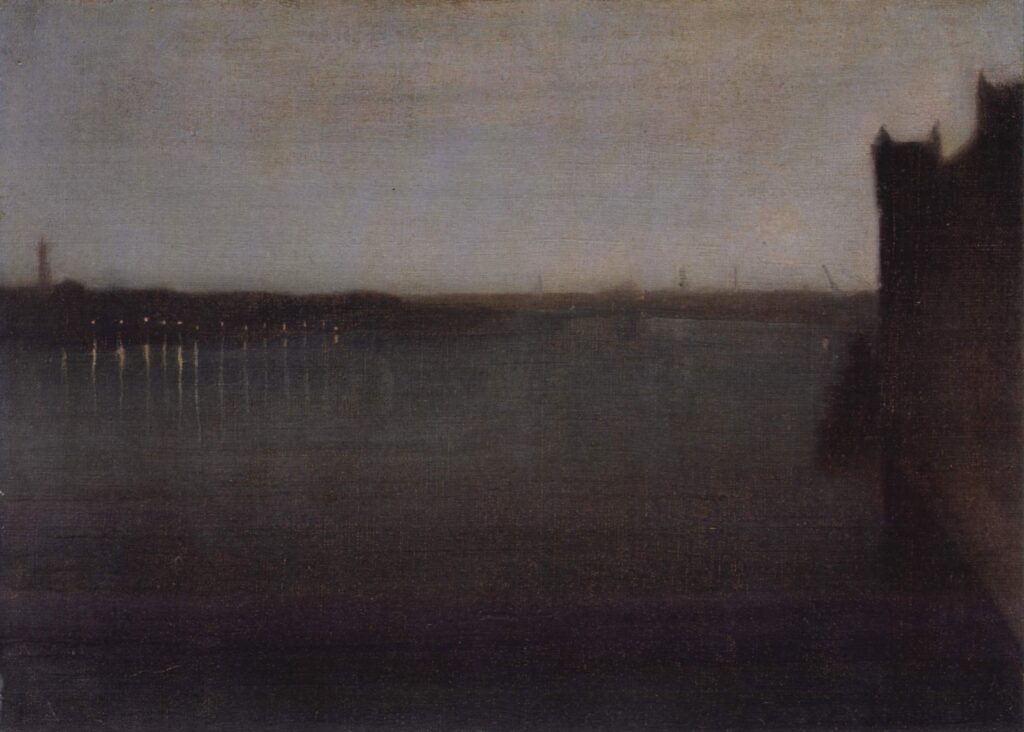
Nocturne in Gray and Gold, from Westminster Bridge, 1874
Oil on canvas, 18.5 x 24.5 in
Burrell Collection, Glasgow
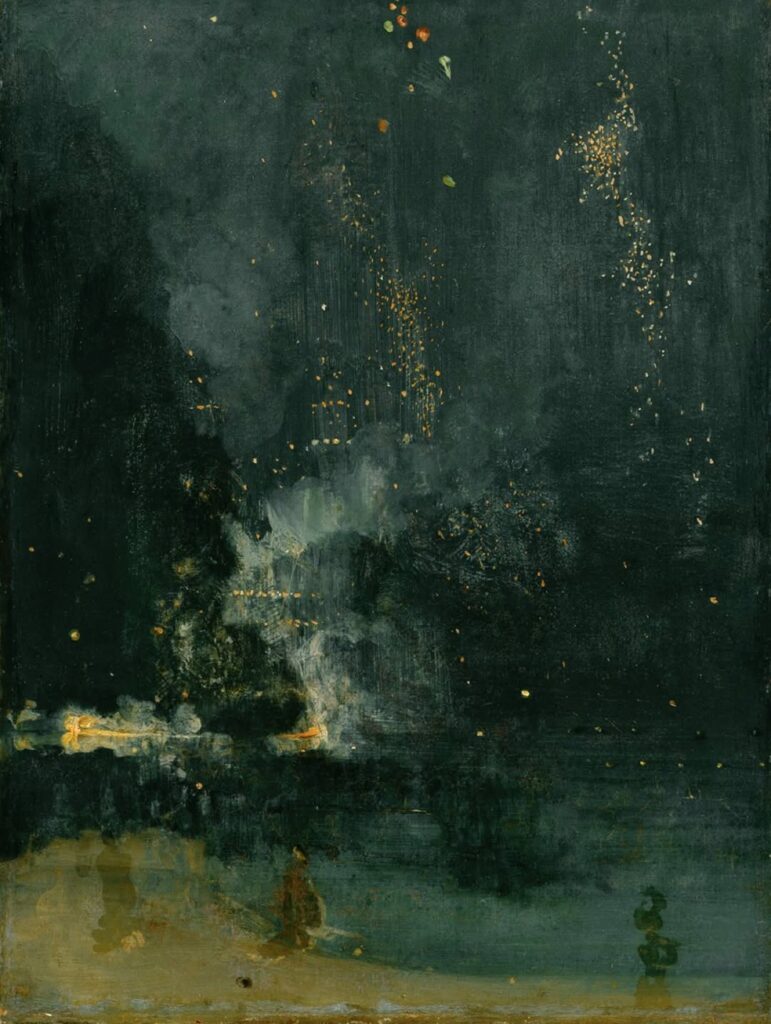
Nocturne in Black and Gold: The Falling Rocket, 1875
Oil on panel, 23.7 x 18.2 in
Detroit Institute of Arts
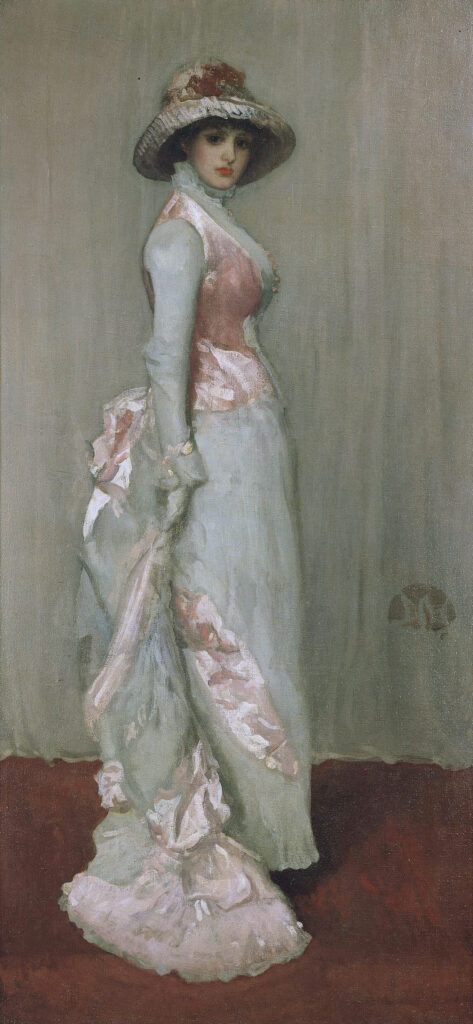
Nocturne in Pink and Gray, Portrait of Lady Meux, 1881
Oil on canvas, 76.2 x 36.6 in
Frick Collection, New York
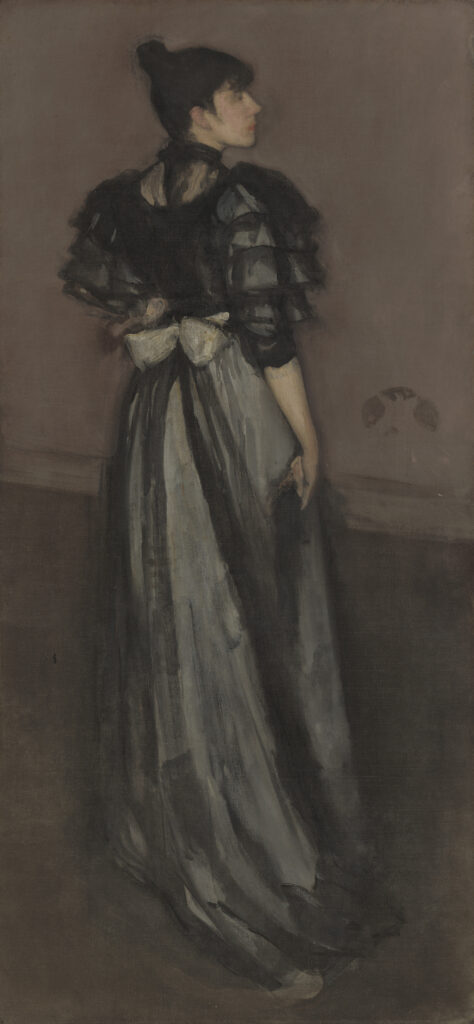
Mother of Pearl and Silver: The Andalusian, 1888(?)–1900
Oil on canvas, 75.3 x 35.3 in
National Gallery of Art, Washington
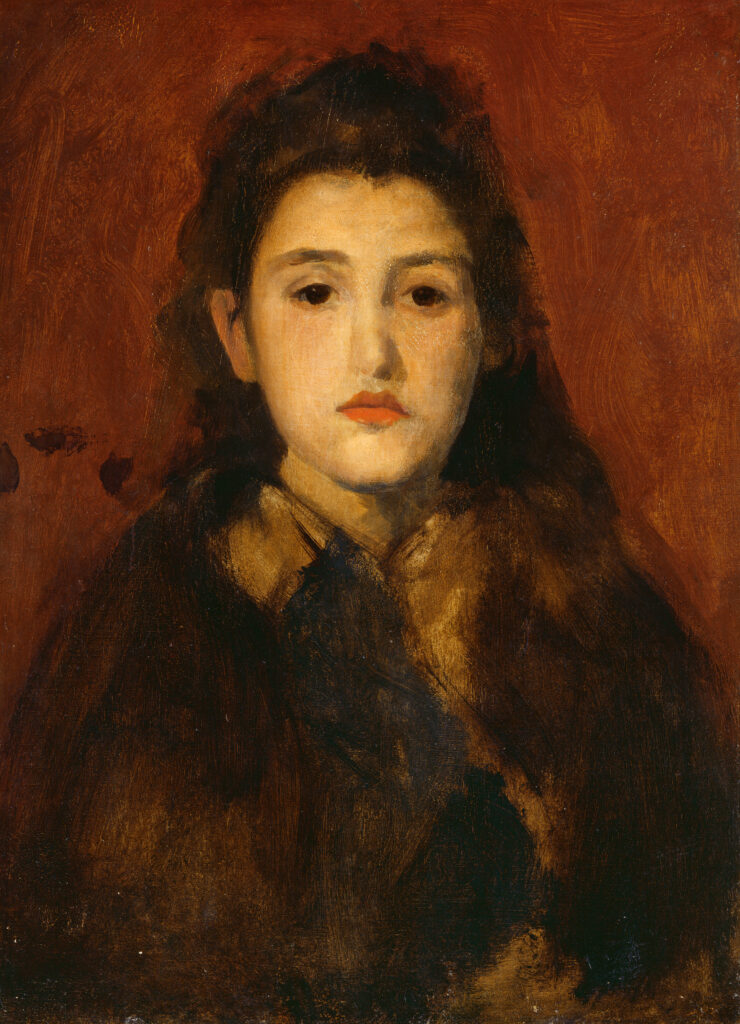
Alice Butt, c. 1895
Oil on canvas, 20.4 x 15 in
National Gallery of Art, Washington
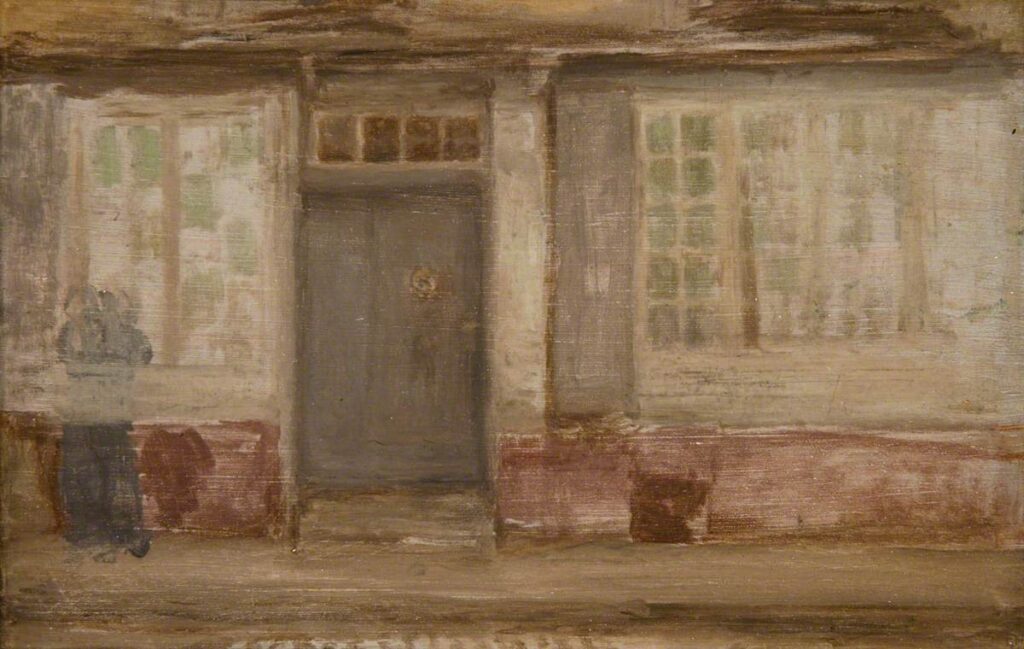
The Priest's Lodging, Dieppe, c. 1897
Oil on panel, 6.5 x 9.6 in
Hunterian, University of Glasgow
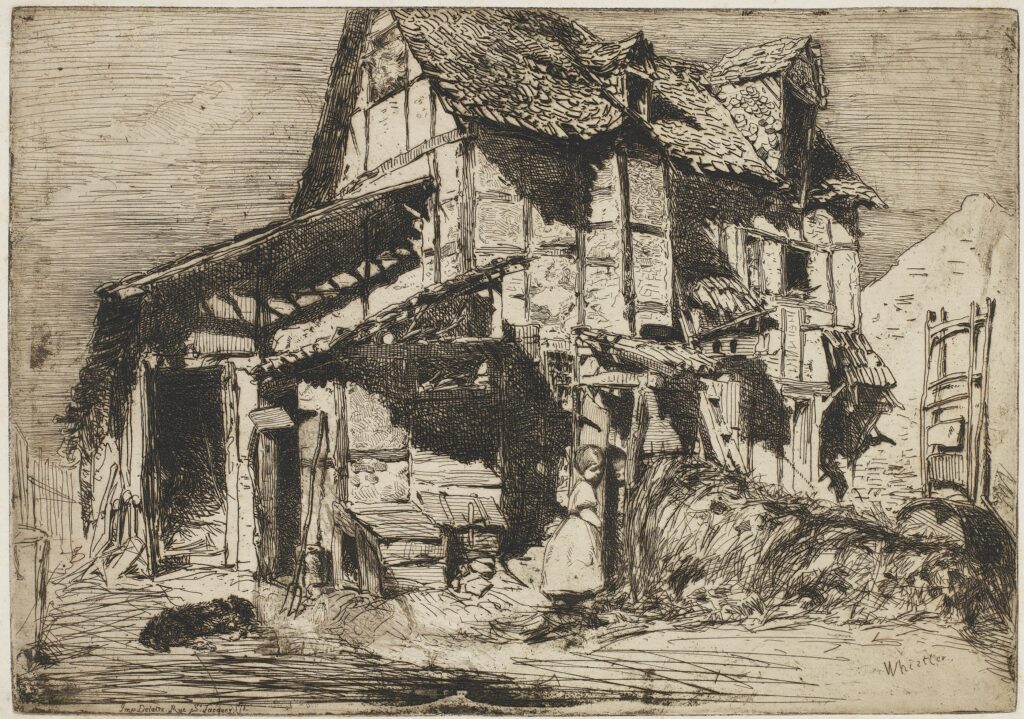
The Unsafe Tenement, 1858
Etching, 6.2 x 8.8 in
Freer Gallery of Art, Washington
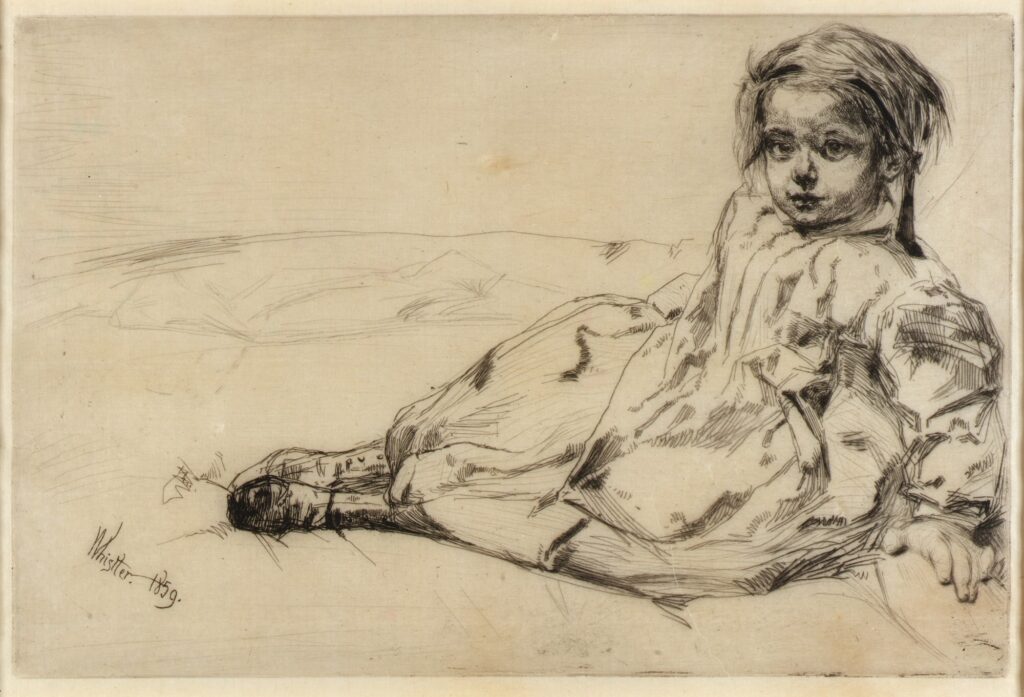
Bibi Valentin, 1859
Etching, plate: 6 x 9 in
Smithsonian American Art Museum, Washington
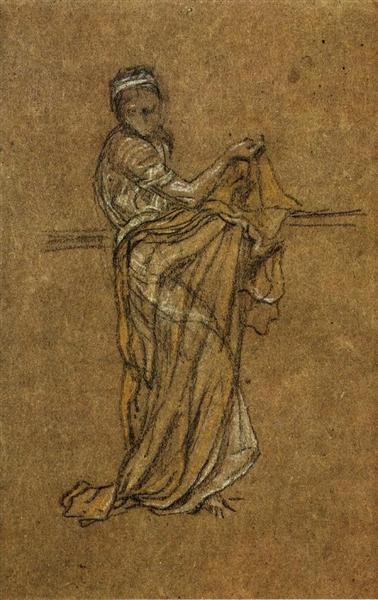
The Dancing Girl, 1868–1870
Pastel, 11 x 7 in

Little Smithfield, 1872
Etching, 6.2 x 3.8 in
Colby College Museum of Art, Waterville
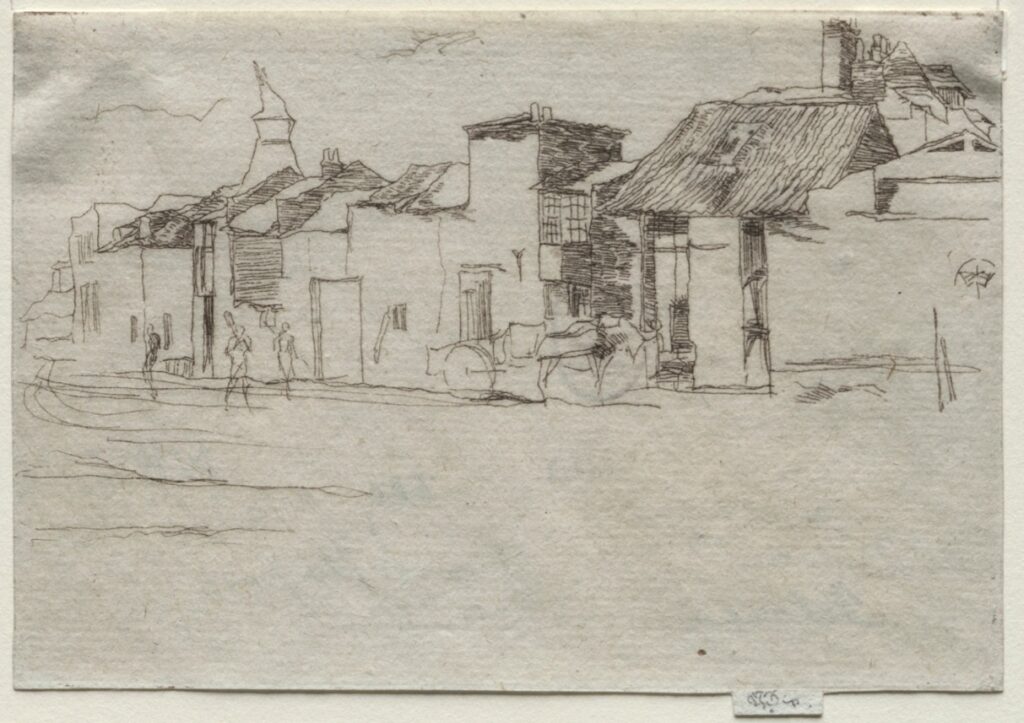
The Swan, Chelsea, 1872–1873
Etching, 2.7 x 3.9 in
Metropolitan Museum of Art, New York
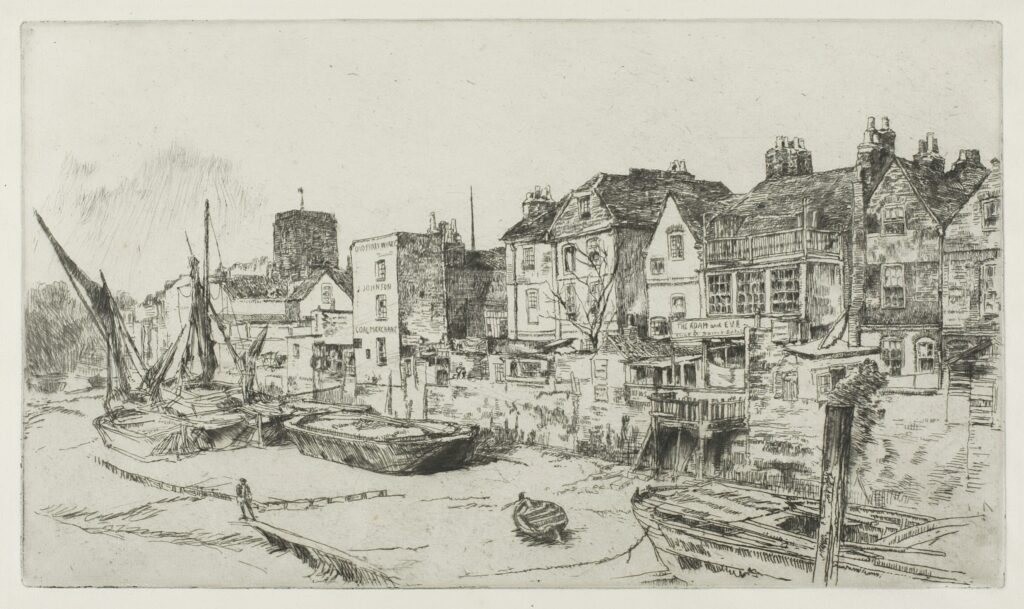
The 'Adam and Eve', Old Chelsea, 1878
Etching, 6.9 x 11.9 in
Art Institute of Chicago
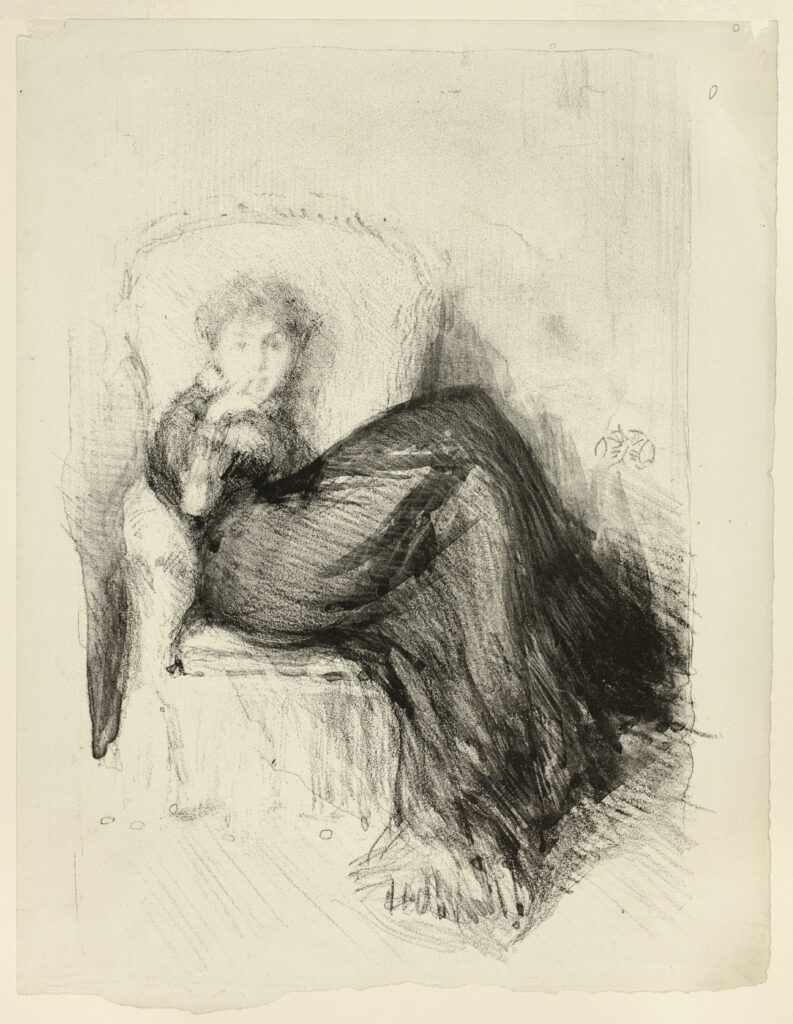
Study: Maud Seated, 1878
Lithotint with scraping and roulette in black ink on ivory wove proofing paper, 10.4 x 7.3 in
Art Institute of Chicago

Courtyard on Canal; Grey and Red, 1879–1880
Pastel and charcoal, 11.9 x 8 in
Saint Louis Art Museum, St. Louis
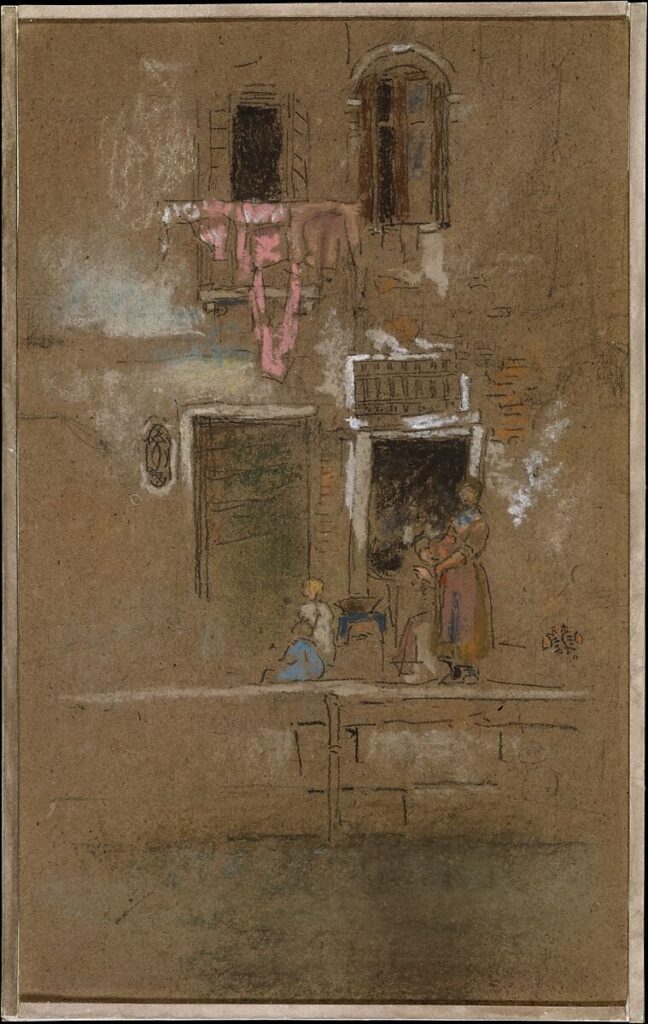
Note in Pink and Brown, c 1880
Charcoal and pastel on dark brown wove paper, 11.8 x 7.3 in
Metropolitan Museum of Art, New York
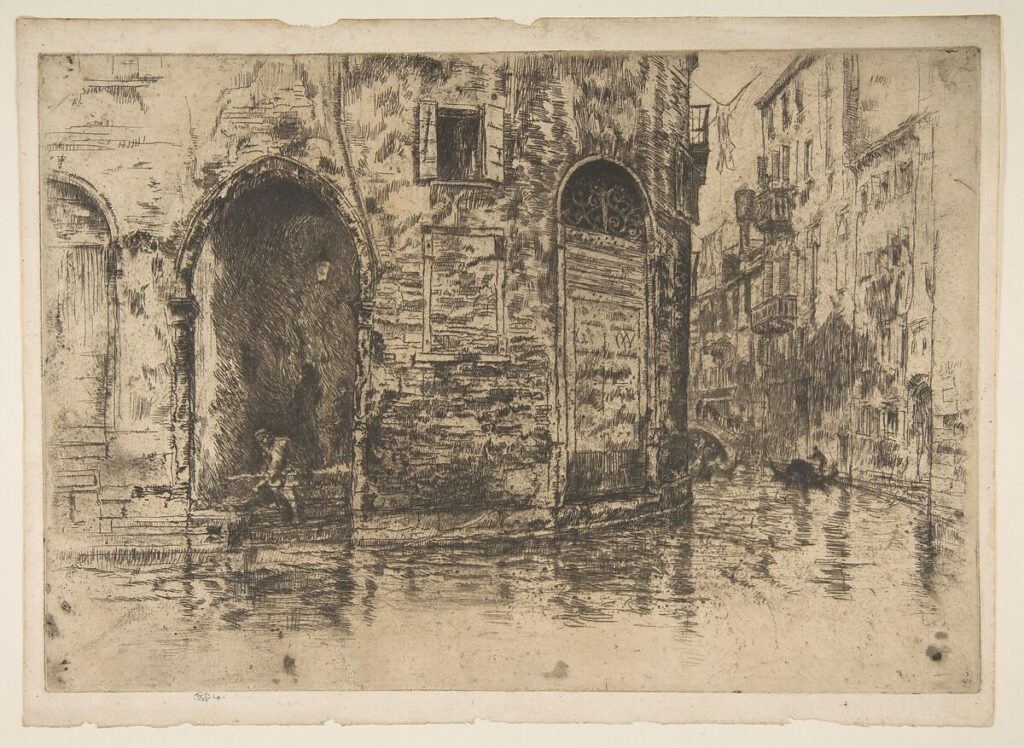
Two Doorways, from First Venice Set, 1880
Etching and drypoint, 7.9 x 11.5 in
Metropolitan Museum of Art, New York
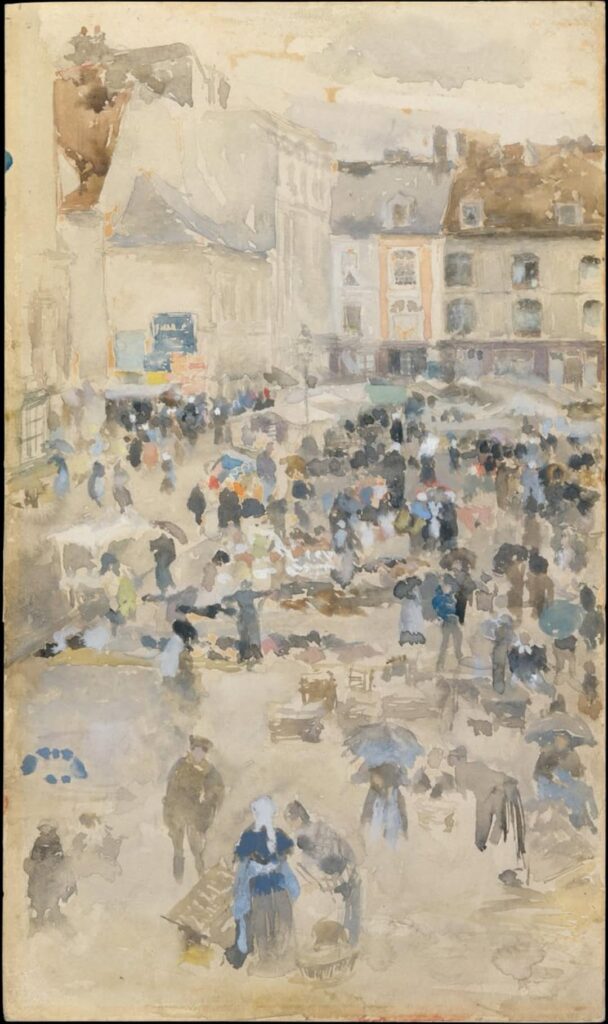
Variations in Violet and Grey – Market Place, Dieppe, 1885
Gouache and watercolor on off-white wove paper mounted on academy board, 7.9 x 5 in
Metropolitan Museum of Art, New York
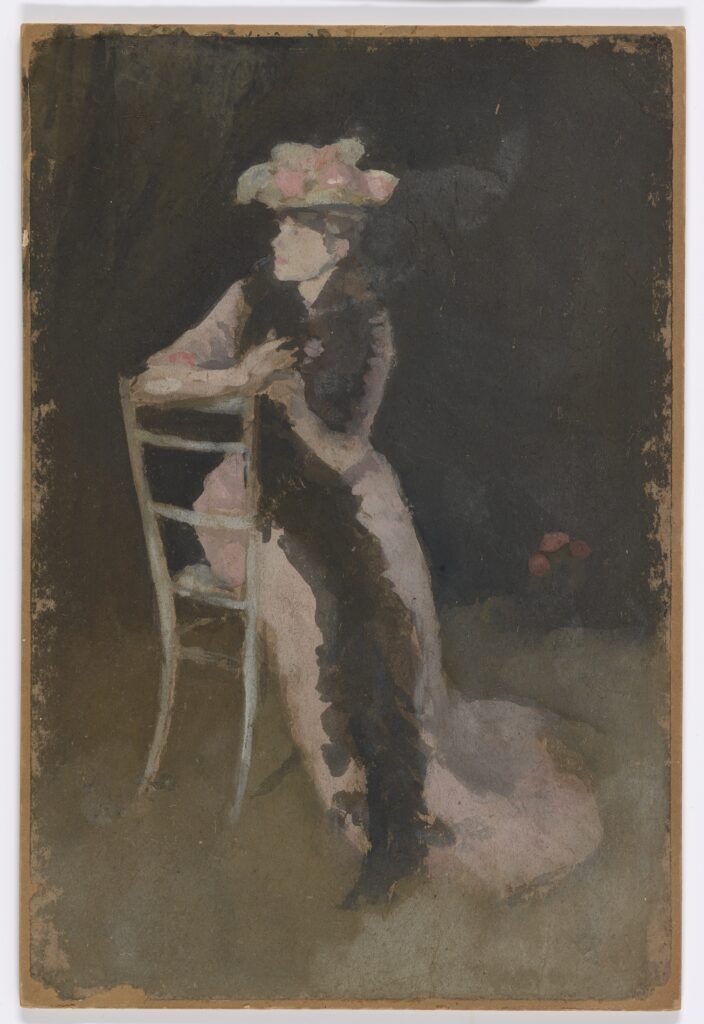
Rose and Silver – Portrait of Mrs. Whibley, 1895–1896
Watercolor on brown paper, 11.1 x 7.4 in
National Museum of Asian Art, Washington
Comments are Disabled